
Privacy Plants Fence Guide Low Maintenance Options for Your Yard Creating a natural privacy barrier along your fence line does not require extensive maintenance if you select the appropriate plants. Low maintenance privacy plants provide year round screening while reducing the need for pruning, watering, and upkeep, making them ideal for busy homeowners seeking seclusion without continuous garden work. Evergreen options such as boxwood offer dense, year round coverage with slow to moderate growth, necessitating only occasional trimming to maintain their shape. Eastern arborvitae flourishes in both sun and light shade, forming uniform screens with just one annual pruning session. Privacy Plants Fence Guide Low Maintenance Options for Your Yard For quicker results, privet grows rapidly into thick green walls that can tolerate poor soil and drought once established. Holly features spiky evergreen foliage that creates natural security barriers while also providing winter berries for wildlife.Flowering options add seasonal interest without requiring additional effort. Lilacs need minimal care after establishment, requiring only light pruning after blooming while producing fragrant spring flowers in various colors, from white to deep purple. Privacy Plants Fence Guide Low Maintenance Options for Your Yard Forsythia heralds spring with its brilliant yellow blooms, thrives in average soil, withstands drought, and grows quickly enough to offer prompt privacy. Climbing plants like honeysuckle can endure neglect and poor soil while creating pollinator friendly screens that do not need constant training. For vertical screening in confined spaces, narrow junipers such as Skyrocket create thick barriers with needle like foliage that withstand harsh conditions. Clump forming varieties of bamboo grow quickly in containers, preventing spreading while providing tall, elegant privacy screens. Most low maintenance privacy plants take four to eight years to reach their full potential, but once established, they offer beautiful, functional boundaries with minimal intervention.
Boxwood Privacy Plants Fence
The Inspiration: Boxwood’s sculptural capabilities were on display in European Renaissance gardens, where French landscape architect André Le Nôtre redesigned the grounds of Versailles Palace to feature complex boxwood parterres in the 1660s. English manor houses incorporated boxwood hedges as living architecture, demarcating property lines in evergreen elegance. This time honored tradition serves as a model for today’s homeowners who seek to establish private, formal edging reminiscent of classic garden country estates while still affording quiet moments of solitude.
Why it works: Boxwood makes thick, year round privacy screens with slow to medium growth and only one or two prunings a year to keep its crisp lines. The dense evergreen leaves naturally create impenetrable screens that don’t lose their leaves in the winter, resulting in no gaps as would be seen with regular deciduous branches. Boxwood grows in full sun and partial shade, is hardly picky about soil type, and will live for many decades with little care after it’s established. Its slow pace of growth avoids constant upkeep and overgrowth that needs aggressive trimming. The timeless green finish enhances any décor, from colonial to contemporary and everything in between while adding value to your property for a lifetime of maintenance free privacy that shows you care about your home.
Pro Tip: Space boxwood shrubs 2-3 feet apart for solid privacy hedge growth in 3 – 4 years. To avoid problems with boxwood blight, select disease resistant varieties such as ‘Green Mountain’ or ‘Green Velvet’. Place 2-3 inches of organic mulch around the root zone but not touching the stems and water deeply while establishing. Shape Pruning Do in late spring, after new growth has hardened off for best shape retention.
Arborvitae Privacy Plants Fence
The Inspiration: French explorers referred to arborvitae as the “tree of life” after Indigenous North Americans rescued Jacques Cartier’s crew from scurvy in 1536 by using the vitamin C rich leaves of this evergreen. For centuries, Native peoples have valued white cedar for its uses in canoe construction, medicine, and ceremonial practices. This life saving heritage has inspired modern homeowners to plant arborvitae as living privacy walls that celebrate nature’s protective qualities while creating private retreats.
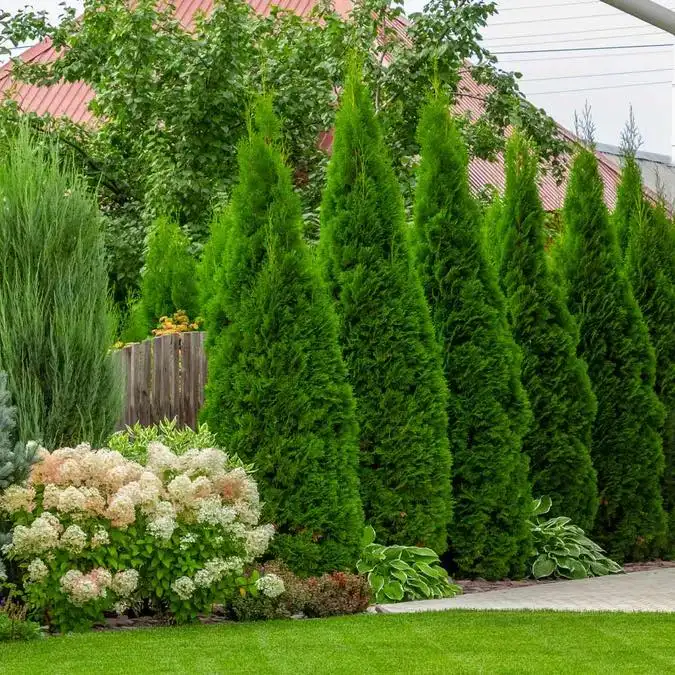
Why it Works: Arborvitae provides year round privacy screens with dense evergreen foliage that stretches from the ground to the top, eliminating the winter gaps typical of deciduous plants. Green Giant varieties grow 3-4 feet each year, forming effective barriers within 3-5 years while maintaining narrow widths of 3-4 feet that fit well in tight spaces. These trees require little maintenance occasional watering, light pruning, and mulching while being resistant to common pests and diseases. Arborvitae also purifies the air by converting CO2 to oxygen, reduces noise pollution, and offers a habitat for wildlife, all while lasting longer than traditional wooden fences, which need replacement every 10-15 years. Their cost effectiveness and ability to enhance property value make them a sensible investment that provides lasting beauty and functional seclusion.
Pro Tip: For maximum density and resilience, plant arborvitae in staggered double rows instead of single straight lines if one tree dies, the surrounding plants will naturally fill the gaps. Space Emerald Green varieties 3 feet apart for formal hedges or Green Giants 5-6 feet apart for quicker coverage. Before winter, tie branches with soft twine to prevent damage from snow and splitting.
Holly Privacy Plants Fence
The Inspiration: Long ago, ancient Druids and Celtic peoples planted holly hedges around their homes in the belief that its spiky leaves would catch evil spirits before they could enter, a spooky shield in case of supernatural attack. The Romans decorated with holly during winter solstice celebrations, while medieval Europeans believed they should never cut down a holly tree for fear it would be unlucky. Current Property Living Security Fences ‘for Good and Evil’ Predating the life of Patrick Harry in New York, an ancient tradition can be traced back hundreds of years with holly fences used as protective barriers.
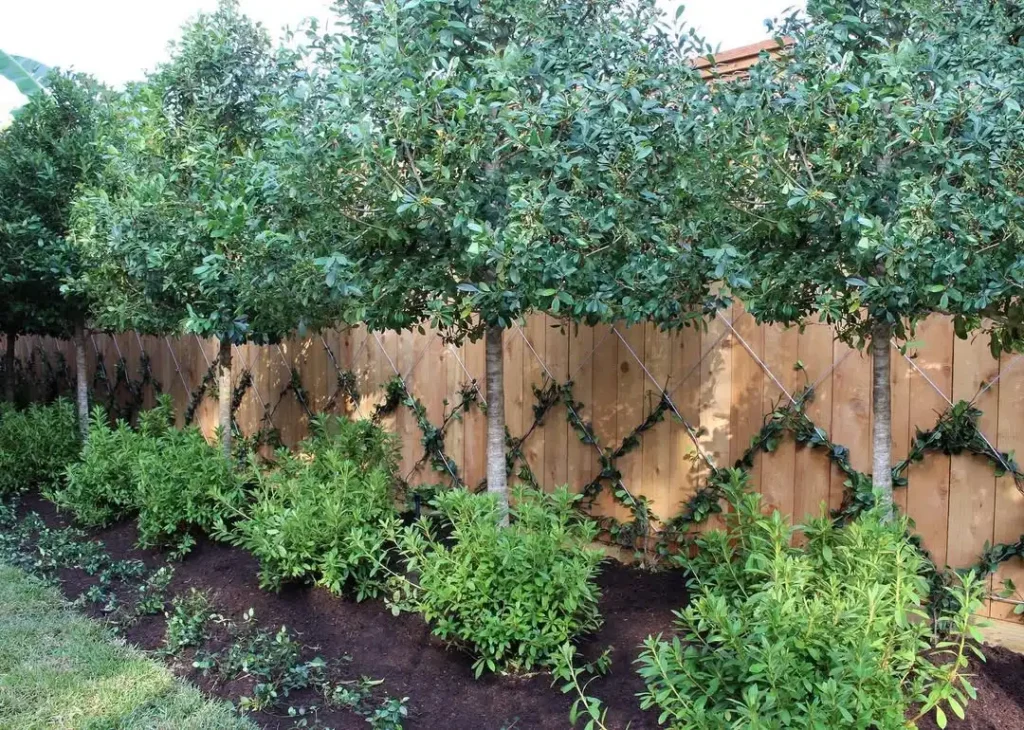
Why it Works: A year round privacy screen, holly has dense evergreen foliage and natural spiky leaves that discourage intruders from crossing property lines. The prickly sensation of the hedge makes for security as well as privacy; a natural modus operandi burglar deterrent that doesn’t scream “keep out”. Holly is better than most evergreens at putting up with shade, prospering in the awkward spots where other privacy plants die off. Female hollies bear attractive red berries that birds love, enhancing the wildlife value and winter color interest when the rest of our yards are looking bare. Easy to care for, little pruning is needed for these hedges that repel pests and last decades while increasing property value with classic beauty and functional boundaries.
Pro Tip: Plant male and female hollies in close proximity One mail pollinator for every three to five females to guarantee the production of berries in the winter season. Plant in space 3-4 ft. apart for a compact, tight hedge in four or five years. Select your regional native Ilex aquifolium or American holly varieties for optimal disease resistance and wildlife value. Fence With Plants Ideas Turn Boring Fences Into Lush Green Walls
Juniper Privacy Plants Fence
The Inspiration: Juniper in some of the oldest human societies Ancient Egyptians used juniper in embalming Mesopotamians thought its oil could protect from evil spirits. Families in the Scottish Highlands conducted Hogmanay purification rituals burning juniper in a house or specialised buildings to prevent harm on dwellers and livestock. According to Mediterranean folklore, witches would spend endless hours counting juniper’s myriad needles and thus folks began planting by the doorway as protection against the supernatural. This millenia old tradition of juniper as protector plant informs contemporary privacy fences that interweaves the mystical past with pragmatic enclosure.
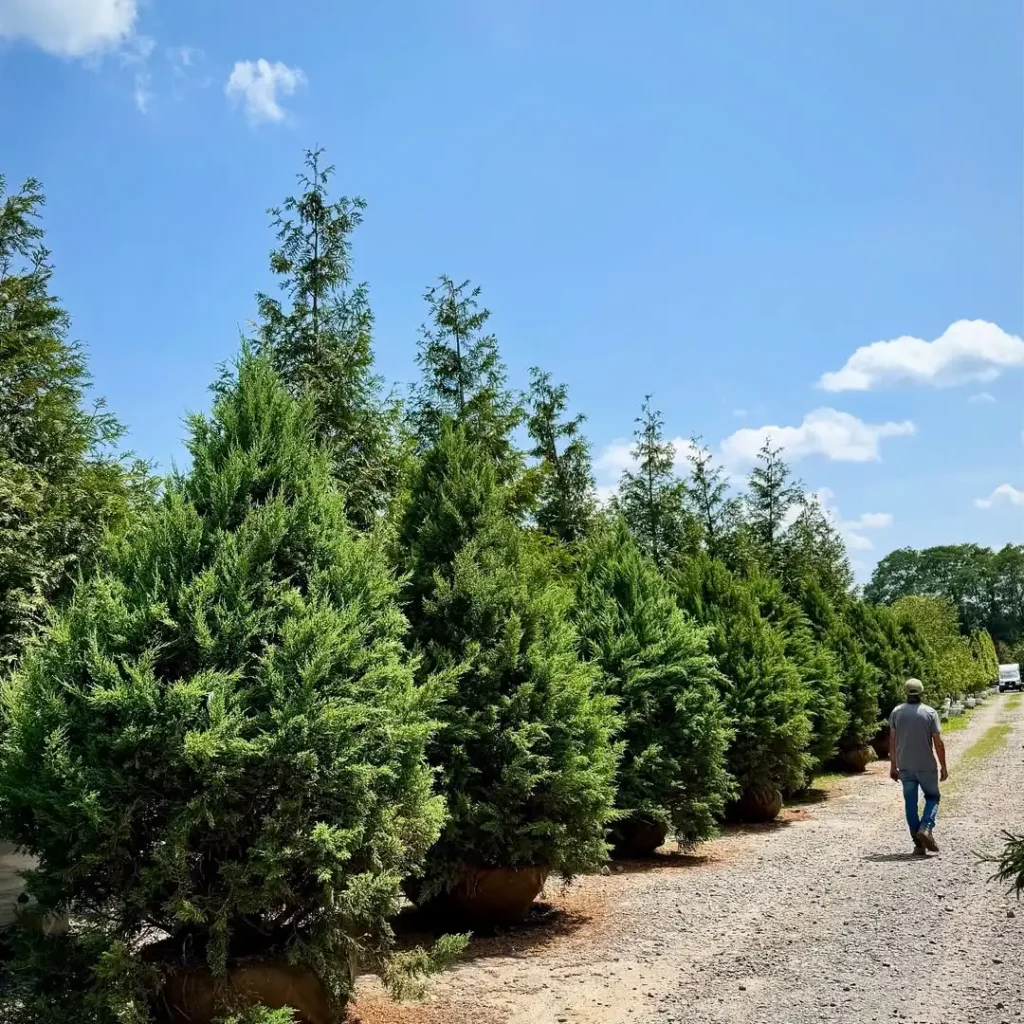
Why it works: Juniper provides evergreen year round privacy screens with dense foliage that tolerates more extreme heat, cold and even drought conditions that often prove fatal to other plants. The highly adaptable conifers prosper in the unfavorable habitats such as poor soils, arid climates and high altitudes that will not support many maintenance intensive species. They don’t have to be that way, though: you can grow one that is a smaller, naturally compact form. Juniper wood is remarkably rot resistant and has been used in the past for fence posts that can last for decades. Deer and pests steer clear of the aromatic foliage, which is also a boon for wildlife. These are tough hedges that do not need much water once established, to produce privacy and sculptural beauty that lasts for generations.
Pro Tip: Select upright columnar selections such as Skyrocket or Blue Arrow for narrow spaces, planting the specimens 2-3 feet apart to form a solid screen in less than three years. Plant in well draining soil junipers can handle drought but are killed by boggy, waterlogged soil that causes root rot. Don’t prune very heavily into old wood, which will not regenerate; cut only new green growth each year for shape.
Yew Privacy Plants Fence
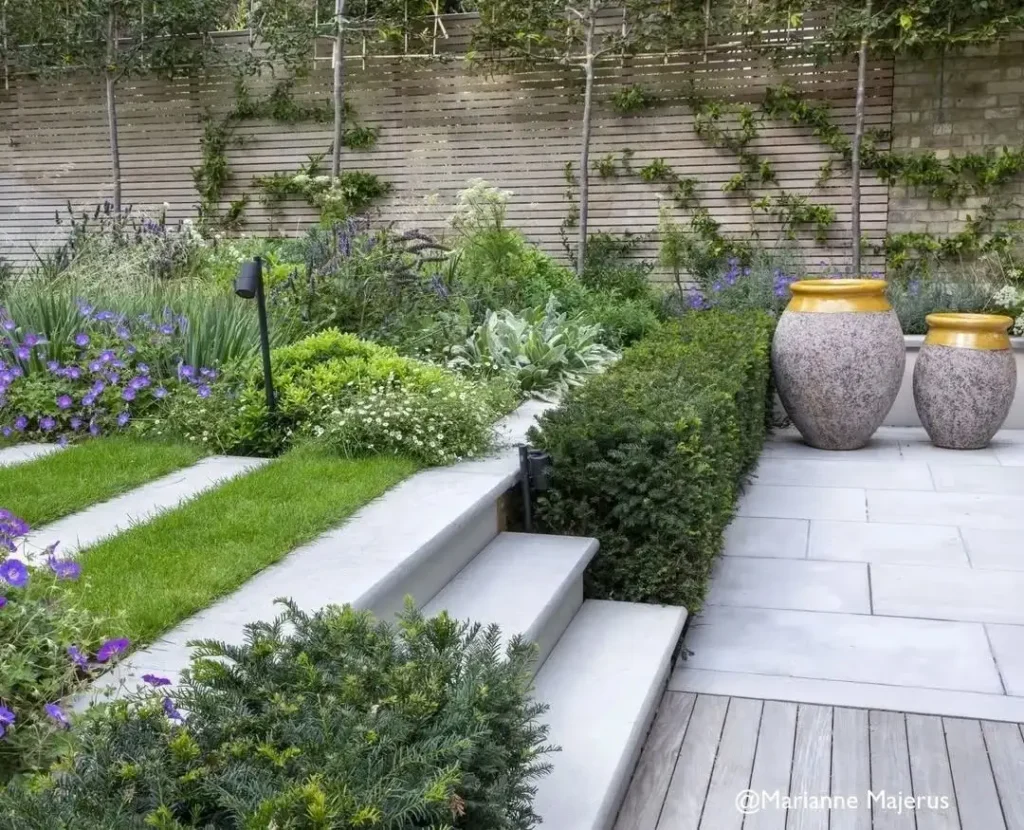
The Inspiration: Ancient Druids held yew trees in high regard as sacred symbols of eternal life, planting them at ceremonial sites where their branches took root in the earth, creating new trunks that represented death and rebirth. Medieval English longbowmen at Agincourt in 1415 used legendary yew bows, cementing the tree’s protective legacy. These thousand year old guardians of churchyards inspired modern privacy hedges that combine mystical heritage with living fortification and timeless elegance.
Why it Works: Yew produces the densest evergreen privacy screens of any hedge plant, with naturally compact foliage that completely blocks sight lines year round. These slow growing hedges can withstand heavy pruning and regenerate vigorously, allowing for precise shaping into formal walls or sculptural forms that maintain crisp lines for decades. Yew flourishes in both full sun and deep shade where other evergreens may struggle, adapting to various soil conditions while resisting common pests and diseases. The toxic foliage naturally discourages deer and livestock from browsing, offering additional security benefits. With lifespans that can exceed centuries, yew hedges become living heirlooms that enhance property value while providing unmatched privacy density and architectural permanence.
Pro Tip: For dense hedge establishment within four to five years, plant bareroot yew plants 18-24 inches apart in late fall or early spring. Trim annually in late summer after new growth has hardened, cutting into old wood confidently unlike other conifers, yew can regenerate from bare branches. Warning all parts of the yew except for the red berry flesh are highly toxic to humans and pets.
Skip Laurel Privacy Plants Fence
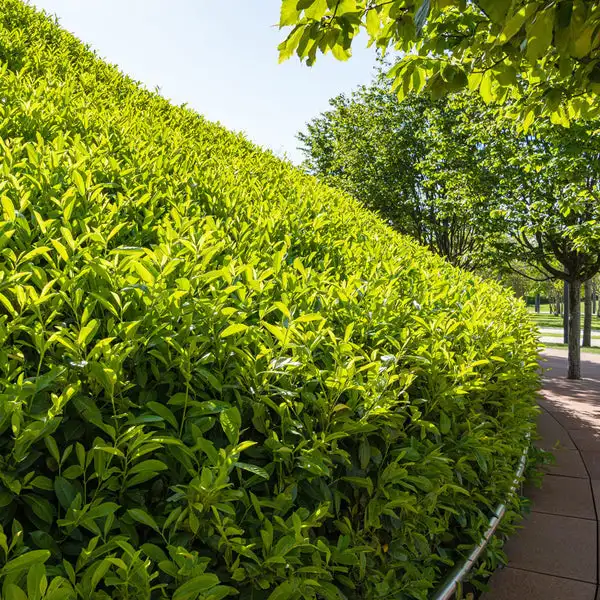
The Inspiration: Bulgaria’s rugged Schipka Mountain Pass gave rise to this resilient evergreen in 1886, where harsh winters and rocky terrain contributed to its legendary hardiness. European gardeners introduced “Schipkaensis” to their estates, which was later affectionately shortened to “Skip” Laurel. This mountain survivor’s journey from the peaks of Bulgaria to American gardens has inspired modern homeowners looking for fast growing privacy hedges that blend Old World elegance with New World practicality.
Why it Works: Skip Laurel provides year round privacy screens with glossy evergreen foliage that grows 2-3 feet annually, establishing effective barriers within three to four years. Its dense branching pattern and smaller pointed leaves create neater hedge lines compared to common laurel, maintaining crisp shapes after trimming while completely blocking sight lines. These versatile shrubs thrive in full sun to deep shade, tolerate poor soil and drought, resist air pollution, and deter deer browsing qualities that are rare among fast growing evergreens. In spring, they produce fragrant white candle like flowers that attract pollinators, followed by dark berries that feed birds throughout winter. Skip Laurel offers rapid privacy without the need for constant maintenance once established.
Pro Tip: Plant Skip Laurel shrubs 3 feet apart for tight formal hedges or 5-10 feet apart for informal screening that highlights individual plants and spring flowers. Ensure regular weekly watering during the first two growing seasons, after which your hedge will become drought tolerant and require no maintenance. Prune in the fall or winter for shaped hedges, or leave them unclipped for natural beauty with seasonal blooms.
Bamboo Privacy Plants Fence
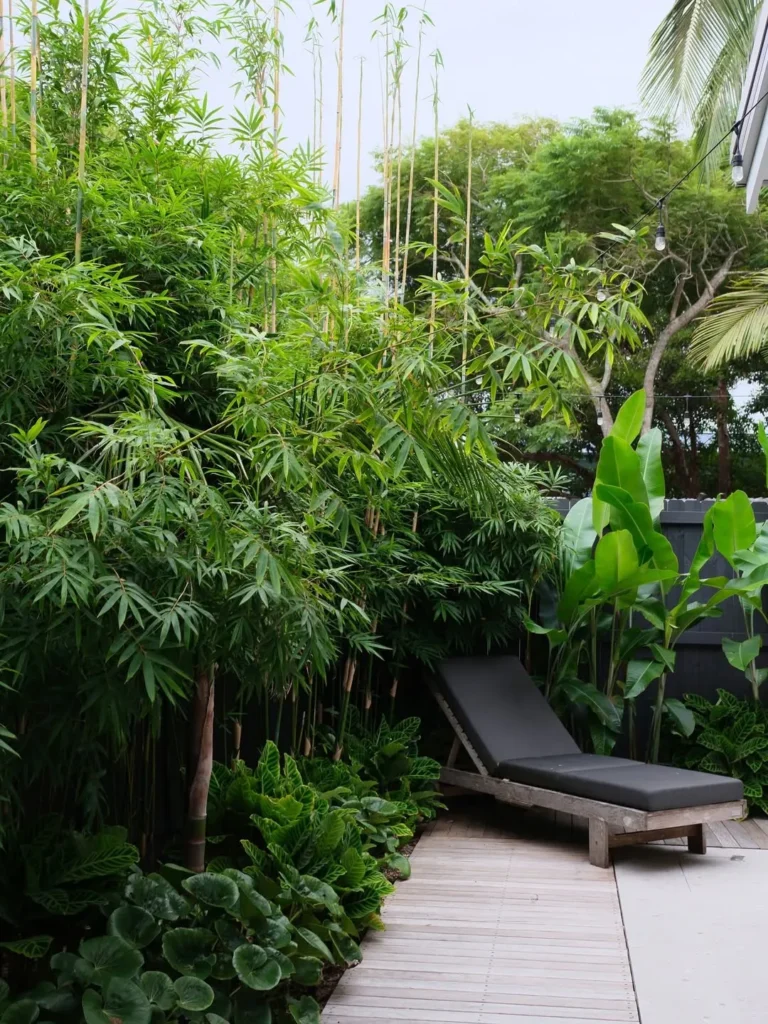
The Inspiration: ForThousands of years, bamboo has shielded Asian gardens, offering up tranquil sanctuaries from bustling streets. Living walls were first introduced in Japanese tea gardens to represent the separation of the bustle of this world from quiet meditation. The wisdom of the ancients is alive today with homeowners using such principles as they transform ordinary backyards into personal sanctuaries where nature serves as both protector and designer.
Why it Works: Bamboo privacy hedges offer a threefold advantage; they grow quickly, are low maintenance, and provide year round screening with none of the downtime of deciduous hedge. Their thick culms obscure views and filter noise and wind, lowering outdoor sound levels by 50%. And bamboo swaying in the breeze, its fronds rustling, provides an aesthetic subtlety that static fences can’t. The living screen also adds property value, while cleaning the air and inviting in helpful wildlife. Unlike wood fences that have to be replaced every 10-15 years, an aged bamboo grove is low maintenance and provides decades of service.
Pro Tip: Avoid spreading by selecting clumping bamboo types such as Bambusa multiplex or Fargesia robusta. Space plants 3 to 5 feet apart for quick screening effect and consider putting in a 24-inch root barrier even on clumping types just in case. Water deeply once a week until established, then sit back and enjoy decades of carefree privacy.
Viburnum Privacy Plants Fence
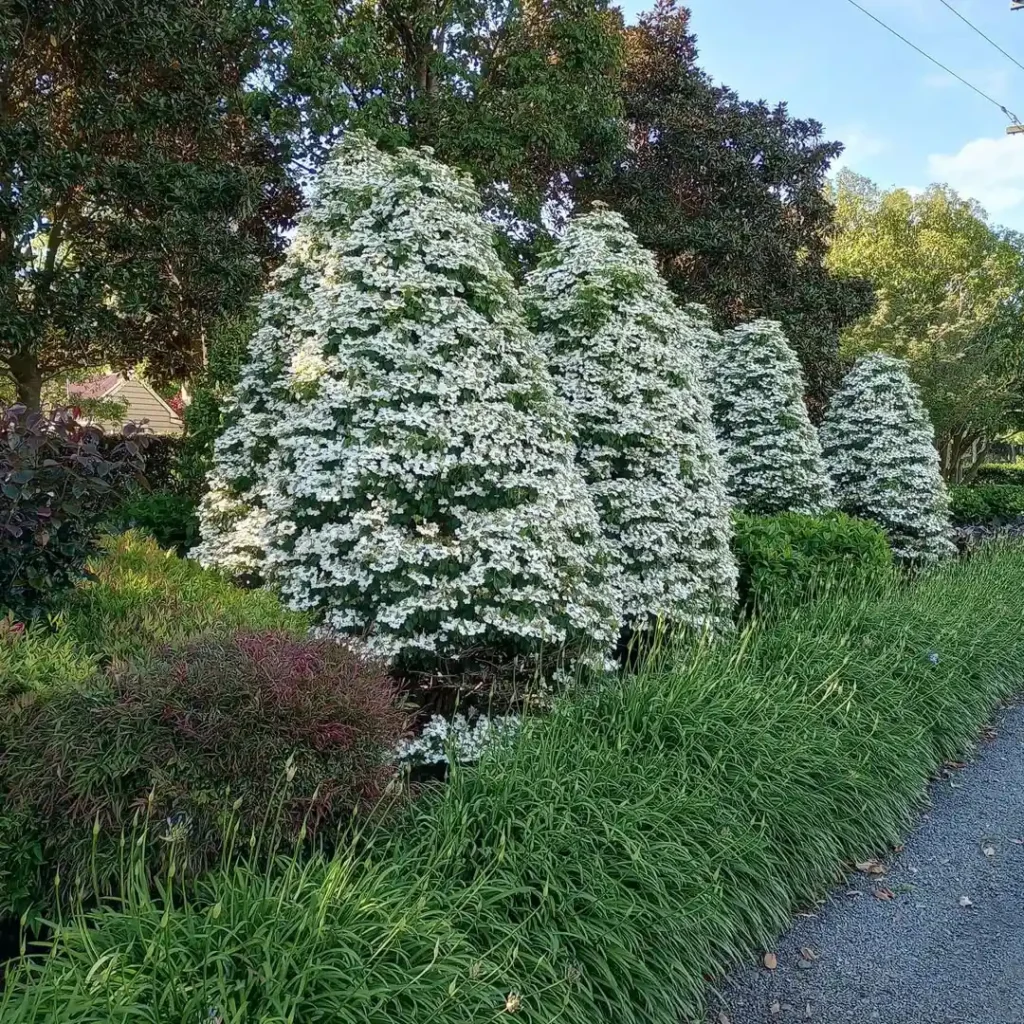
The Inspiration: Victorian English gardeners revered viburnum’s versatility, planting sweet-smelling hedgerows that side blasted through winter when nothing else out in the yard one might say offered a sign of life. These rugged little shrubs served as estate perimeters, their white flower heads broadcasting the arrival of spring and their dark glossy leaves offering year round privacy. Today we see this ancient plant re emerging with modern home owners, as they try to create living walls going through the seasons of beauty, Barrier without hard harsh cold fencing.
Why It Works: Viburnum privacy fencing serves a dual purpose of beauty and usefulness. Viburnum Odoratissimum takes trimming well and grows rather quickly, making it one of the more popular hedge plants for warmer climates. Branches densely to resist entry yet full sun to part shade adaptable for tough urban conditions. Unlike deciduous hedging that turns to brown sticks all winter long, viburnum plants are either evergreen or semi evergreen and hold up to 50% foliage through the cold season. The bonus: Fragrant spring blooms and colorful berries that attract pollinators Without much in the way of pruning. Once in place, these drought-resistant bushes have few demands other than annual spring fertilization.
Pro Tip: To screen more quickly, space 3 gallon viburnum containers 3-4 feet apart; give them a little more elbow if you are growing them up as individual specimens. Deep, regular water during first year; once established, reduce frequency. Feed with a balanced fertilizer in spring, and lightly prune after flowering to shape it up and promote maximum bloom.
Magnolia Privacy Plants Fence
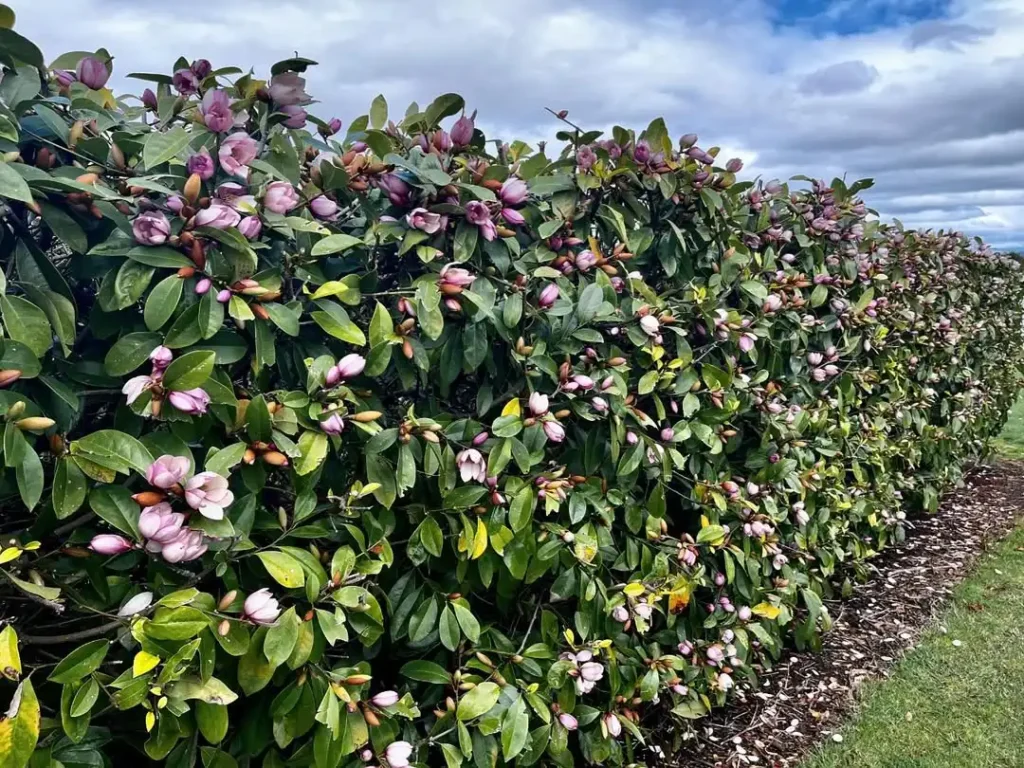
The Inspiration: Gardens of southern plantations, where magnolia’s grandeur was immortalized with towering specimens that stood sentinel along estate drives as though the trees themselves were statues. Their shiny leaves dappled sunlight as it streamed through, and provided shade in small garden rooms where people could congregate. These aristocratic evergreens murmured of elegance and permanence, turning property lines into architectural declamations. Today’s gardeners tap into that antebellum romance, finding compact cultivars of magnolia that drape those creamy blooms over the peeling paint of suburban yards in search of both privacy and beauty.
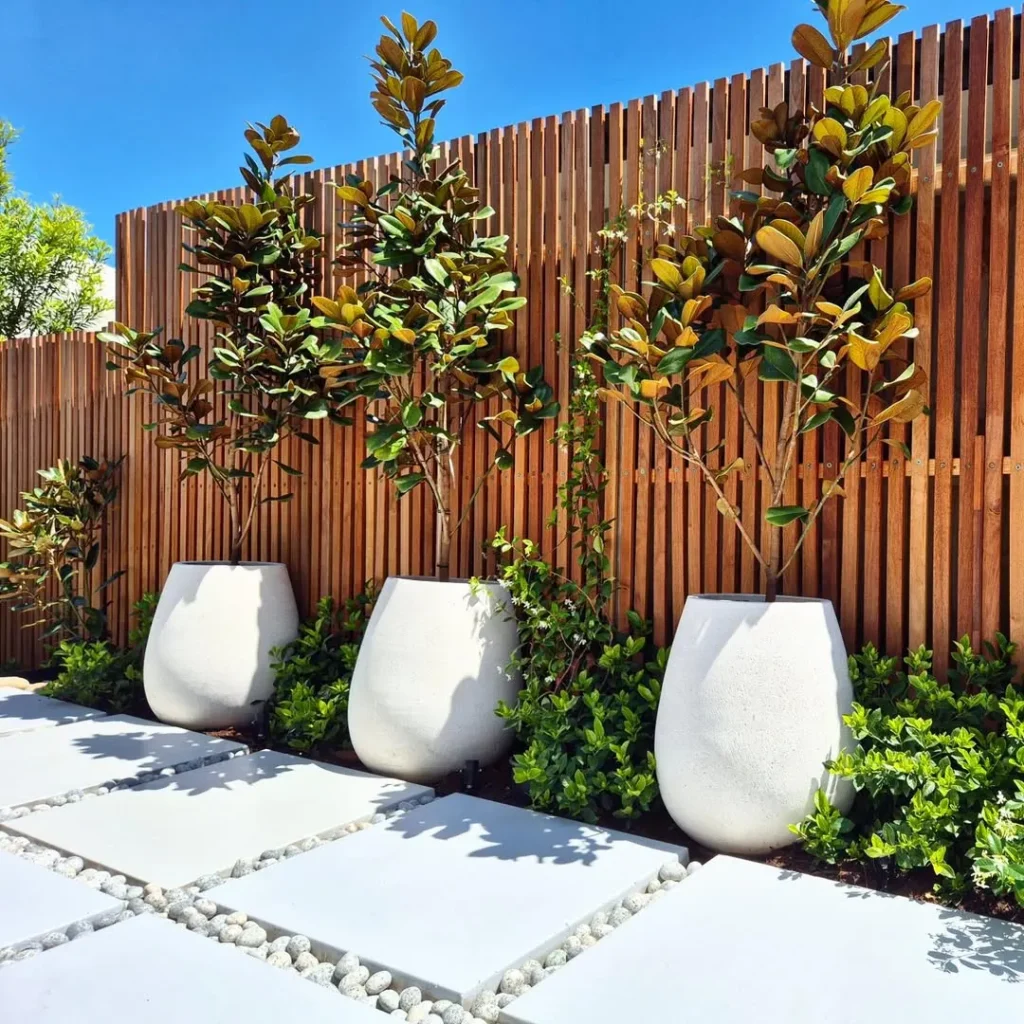
Why it Works: Magnolia Privacy fences offer the ultimate in sophisticated private screening. Evergreen types such as Little Gem and Brackens Brown Beauty keep leaves quite well through the year, providing good insulation from sightlines and noise generated by traffic. And they have tough, leathery leaves that stand up to wind damage and require very little pruning a few times a year at most just to maintain its shape.” An absolutely huge 1 foot plus dinner plate of flowers appear all summer to make a visual and fragrant sight turning even everyday barriers into a small garden space. Furthermore magnolias grow at a moderate rate (1-2 feet per year) so their margins won’t need to be trimed frequently like other fast growing hedges. Their insect and disease resistance along with their drought tolerance when established make them a low maintenance investment that greatly increases property value.
Pro Tip: Opt for space saving varieties like Little Gem and plant them 6 to 8 feet apart when planting for a hedge or screen. Grow in acidic, well drained soil enriched with organic matter. Mulch heavy around roots, but keep mulch 6 inches from trunks. Deep water weekly until established, then monthly in dry periods.
Wax Myrtle Privacy Plants Fence
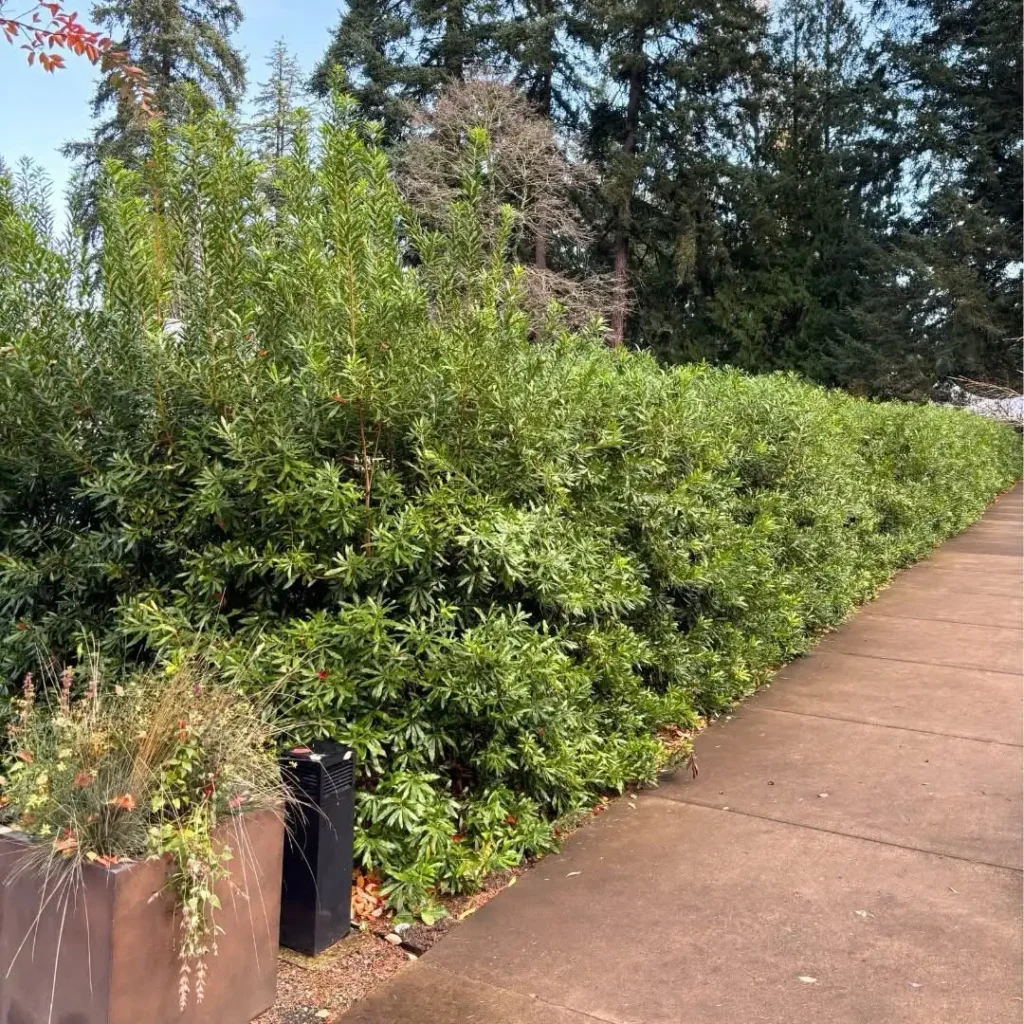
The Inspiration: Colonial Americans collected the fragrant berries of wax myrtle, boiled them in water to extract aromatic wax and used it for candles that lighted homes during winter. These tough coastal natives succeeded where other plants failed, and became cherished boundary markers in Southern gardens. Their silver blue berries and olive green leaves seemed to be saying that design and utility meet in the middle. In the world of eco aware homeowners, these heritage plants are being rediscovered and used to create fast growing privacy screens that not only honor native ecosystems but also shelter modern outdoor sanctuaries.
Why it Works: They’re not only fast but also resourceful; wax myrtle privacy fences are the epitome of green. These evergreen trees grow at a rate of 3-5 feet per year and put on dense screening in just 2-3 years. Their resistance to salt, drought and heat make them almost maintenance free once they are established as no fertilizers or pesticides are used. Thick foliage is also evergreen for year round privacy, but the mature height is only 15 to 20 feet, so it won’t get as out of control as some other fast growers. The ecological bonus: Fragrant leaves are naturally resistant to pests, and blue gray berries feed songbirds all through winter. The fact that they have broad roots can also make them a means to prevent erosion, especially on slopes or hills.
Pro Tip: Place 15-gallon wax myrtles 5-6 feet apart for faster hedge production without overcrowding. Space at least 5 feet away from property lines to allow for future magnolia spread. During the first season, provide regular water only as needed to establish; after establishment enjoy some drought tolerance. Keep lightly pruned or let grow wild wax myrtle looks good in either formal or more casual shapes.
Lilac Privacy Plants Fence
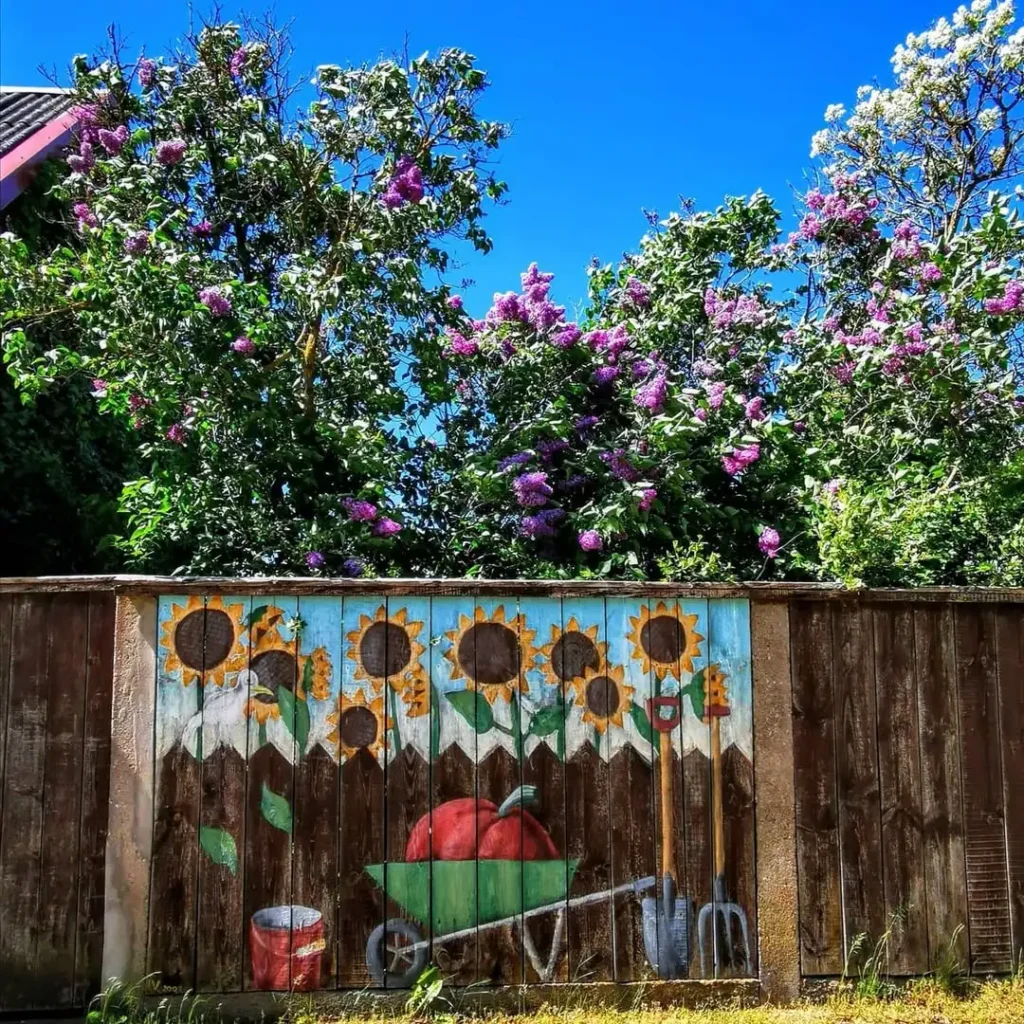
The Inspiration: New England farmsteads and Victorian cottage gardens that immortalized lilac hedgerows, where purple and white blooms heralded spring’s arrival with intoxicating scent. Grandmothers brought armfuls to kitchen windowsills, the scent interwoven with generations of family history. These hardy shrubs defined property lines while scenting entire neighborhoods. Modern gardeners revive this memory laden tradition with plantings of lilac hedges that escort lawns into the realms of an annual pleasure palace where privacy collides with sensual gratification, bridging past and present on a wave of classic blooms.
How It Works: Lilac privacy fences provide value in multiple seasons after initial spring show. It is also an effective summer screen with its dense branches, maturing 8-15 ft. tall and 6-12 ft. wide. Hardy in zones 3-7, they thrive in the Northern climate where other hedges fail. Here’s the legendary fragrance that turns every play yard into a year round wonderland! Extending her great smelling blooming season is this super fragrant pink selection of Kousa Dogwood, with flowers lasting 2-3 weeks in May. Once planted, lilacs are low maintenance no fertilizer, infrequent water and they are pest resistant which means you can pretty much ignore them after planting. Their suckering nature means that they will fill in patches without being invasive, thus forming walls over time which are impenetrable to foot traffic and tall except where underpruned as a stool. Natural Privacy Fence Designs with Fast Growing Greenery
Pro Tip: Space bare root lilacs 5-7 ft. apart in full sun and well drained soil for the best hedge results. Do not plant too deep keep the crown at ground level to avoid decreased flowering. Deadhead spent flowers as soon as possible after they bloom to promote a display the following year. Prune once in the spring after flowering, using this tip: only remove the oldest of canes to allow for good air circulation and keep natural shape.
Privet Privacy Plants Fence
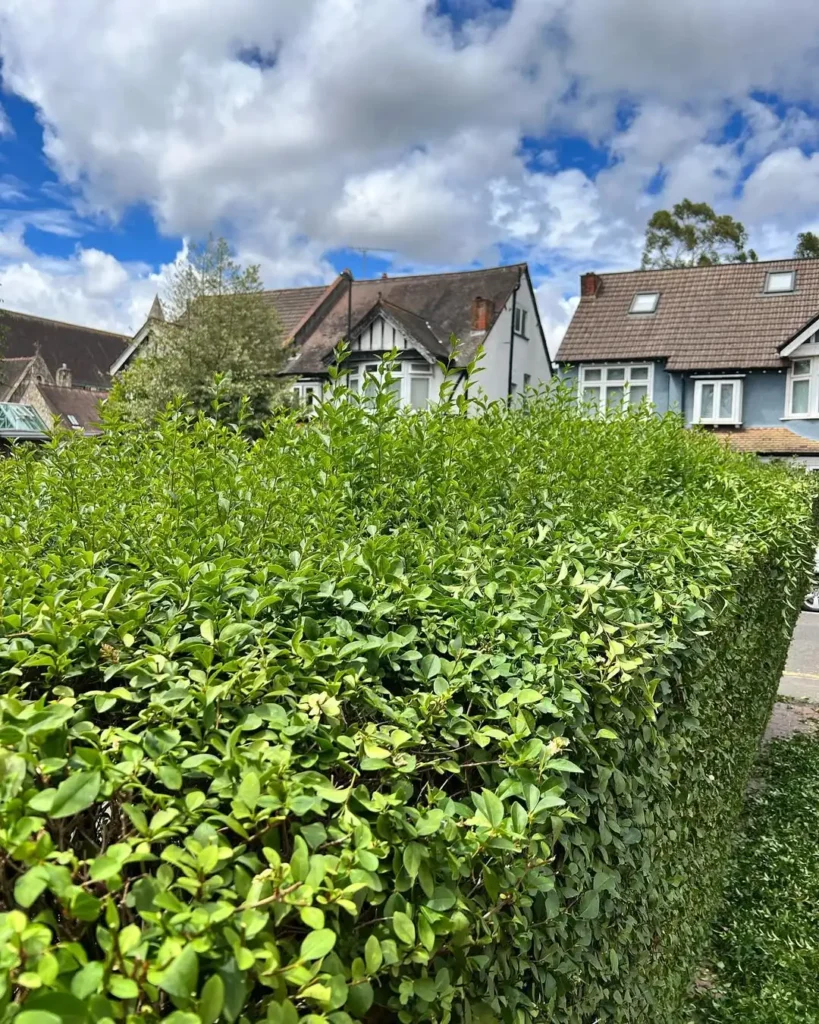
The Inspiration: English estate gardens masterfully produced privet hedging in the 18th century, shearing crisp green walls that edged formal parterres and concealed secret garden rooms. These forgiving shrubs were fashioned into architectural masterpieces by topiary artisans and, in the country cottages of England, rows of more humble privet used to draw a stern green division between their vegetable plots and flower beds. This horticultural workhorse came to epitomize an ideal of restrained borders not too showy, just smart enough. Today’s homeowner loves the adaptable privet, using its tailored chops to create privacy screens reminiscent of age old European garden elegance.
Why It Works: Privet privacy fences stand out for their fast growth and hardiness. They grow 2-3′ a year, form a thick screen in just 2-3 years, and are pretty tolerant of everything full sun to partial shade, any soil you can name, city pollution. Their fine foliage is easily sheared, formed in the desired shape whether rounded, squared or any free hand look; comes back and fills in best with annual pruning. Most of these selections are semi evergreen to evergreen so they provide year round screening. Privet are distinguished by their cost effectiveness: plants are inexpensive, grow readily from cuttings and need very little fertilizing. Their density deters intruders, provides a sound and wind buffer and gives you authentic outdoor privacy, but at 1/10th the cost of traditional hardscape fencing.
Pro Tip: Space your privet 12-18 inches inches apart for a dense hedge, or closer if you want immediate privacy. Prune hard the first two years cut back to 6-12 inches to stimulate a bushy, bottom heavy growth habit that fills in any voids. Prune 2-3 times during the growing season, trimming to shape wider at the base than top to permit sunlight throughout and fullness from bottom to top.
Forsythia Privacy Plants Fence
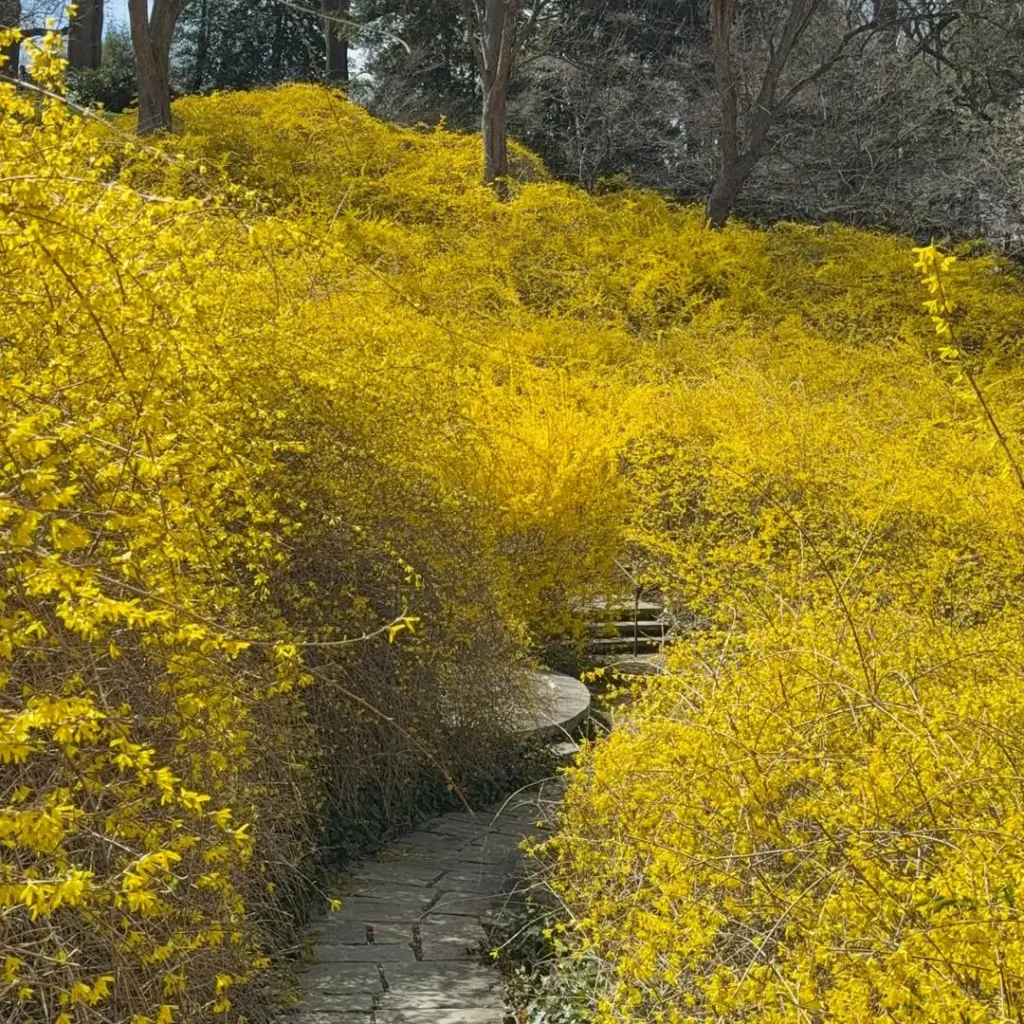
The inspiration: Wintertime Victorian gardeners appreciated the forsythia’s blossoming explosions of golden when the landscape was still in winter’s wintry grip. These ambassadors of sunshine went on to become much-loved harbingers of spring in the gardens of European estates, where their electric yellow trumpeted the triumphant arrival of spring weeks before other plants had even awakened. Children smushed their faces into windows and counted blooms as if they had been fallen stars. Today’s gardeners are bringing back this happy tradition by planting forsythia hedges that turn dull property lines into yearly celebrations, bridging the end of winter and the start of spring with nature’s cheeriest color.
Why it Works: Forsythia privacy fence serves double duty as a fast-growing visual barrier and low-maintenance landscape accent. These tough shrubs form thick, impenetrable hedges in no time, covering spaces between plants in a single growing season when placed 3-4 feet apart. Your Proven Winners Double Take flowering quince blooms on old wood in early spring and you can enjoy sweet music for about 2-3 weeks, then the pretty flowers fall away to be replaced with rich green foliage that provides good dappled screening from summer into autumn. Forsythia is tolerant of all soil types except for ones that are constantly water-logged and does fine in full sun or partial shade. And cold? It’s grown as far north as Zone 4. Maintenance is minimal: one pruning after blooming, once a year, keeps the shape. Deciduousness means winter transparency, but arching branches nevertheless give partial screening and architectonic interest.
Pro Tip: Space forsythia 3-4 feet apart to create thick privacy hedges. Prune just as spring bloom concludes and before new flower buds set this is the optimal time to encourage flowers for next year and control size. Space 18-24″ for formal hedges and shear as needed. Plant in full sun with well drained soil for best flowering and growth.
Elderberry Privacy Plants Fence
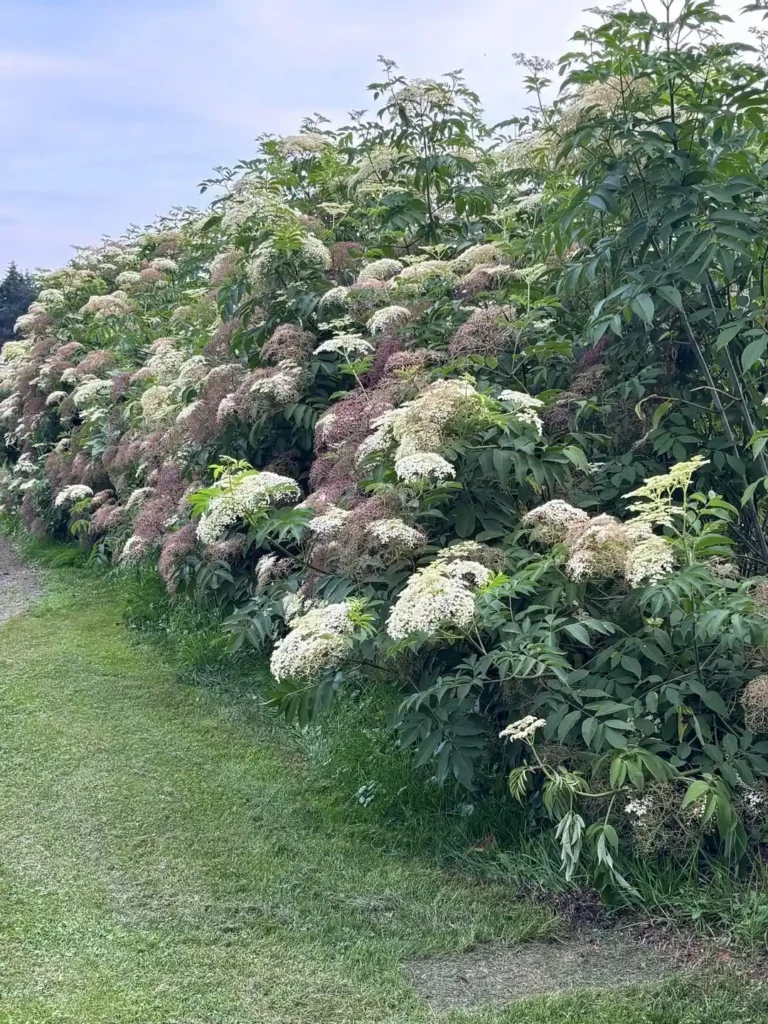
The Inspiration: In Europe’s cottage gardens, elderberry was a dual-purpose boundary plant that provided both medicine and food. Herbalists were gathering creamy flowers for cordials and purple berries for immune boosting syrups. Modern homesteaders are resurrecting this tradition, setting out elderberry fences of their own that turn property lines into productive sanctuaries where privacy becomes a harvest and beauty meets function as wildlife flourishes.
Why it Works: Elderberry privacy hedges grow quickly and provide functional uses. These vigorous growing shrubs quickly reach 8-12 feet in just two years, providing an impenetrable screen with edible benefits. Solid, branching barriers with noise reduction and trespass deterrent qualities. The creamy white clusters of flowers feed the pollinators in late spring, and ripe berry harvests for syrups and wine making come in late summer as deep purple black fruits that are full of vitamins. Value to wildlife is excellent songbirds eat the berries and take cover in foliage. Cold hardy to Zone 3 and tolerant of a wide range of soils, elderberries are low maintenance once planted. Due to their inherent resistance, they do not need chemical treatment and are ideal for organic gardens.
Pro Tip: Space elderberry 6-8 feet for dense hedging in full sun. Plant two or more varieties for cross pollination and increased fruiting. Cut back annually in late winter, take out oldest canes to encourage new growth. Mulch well and water well during establishment. Pick flowers when open, berries when richly purple.
Jasmine Privacy Plants Fence
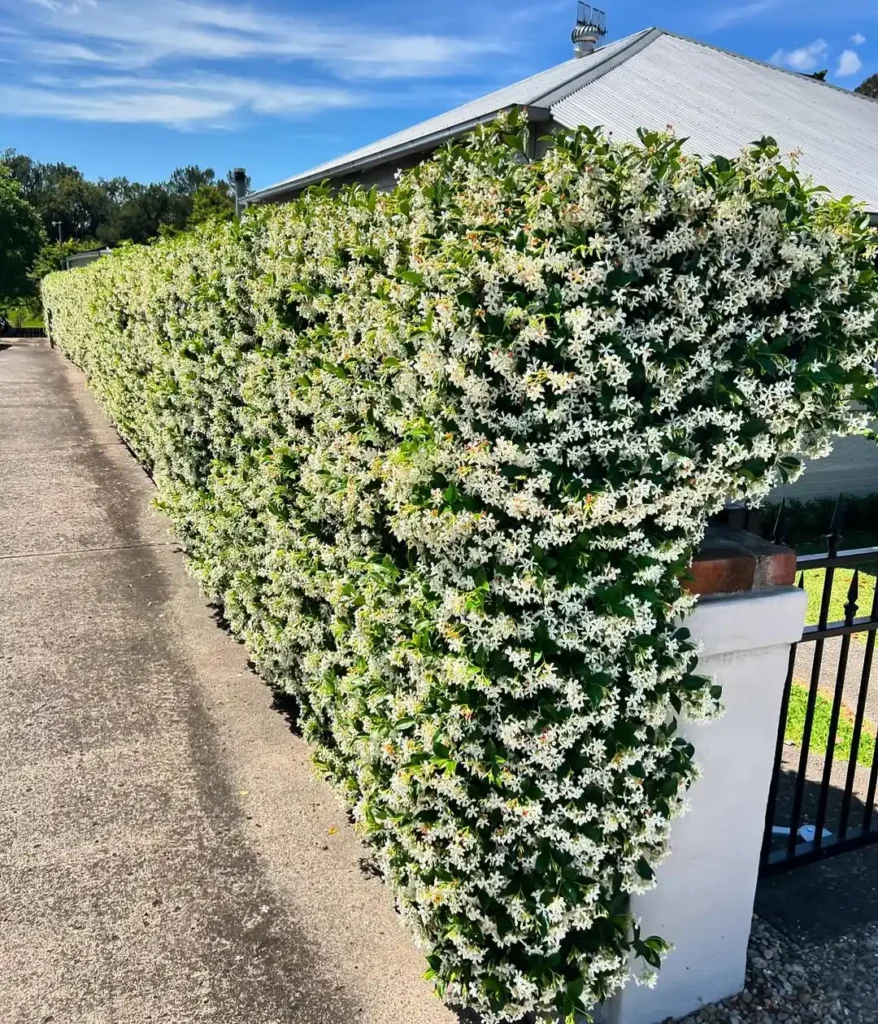
The Inspiration: In Persian palace gardens, jasmine was grown on courtyard walls and blossoms of moonlight perfumed the night. These climbing vines turned everyday barriers into sensual delights, their star shaped flowers laced through lattice in appliquéd bloom. Jasmine’s fragrance was immortalized by Arabian poets as “moonlight’s breath.” Today’s gardeners reenact this ancient romance, weaving jasmine along fences and trellises, using it to screen views in the same way previous generations did but with added perks that didn’t appear on the premodern billing: privacy screens that satisfy three senses instead of just one sight, smell and touch turning regular size yards into small intimate perfumed spas reminiscent of someplace far away.
Why it Works: The best privacy fence ideas for deck and patio are those that brindle block the view through. Strong vining growth that quickly covers structures within just 1 or 2 seasons DENSE FOLIAGE Prevents whatever you are growing from being seen by other and blocks up to 90% of the sun´s rays. Strongest at dusk, the legendary fragrance makes outdoor living a fragrant experience that not even wooden fences can replicate. Zones 8-10 Star Jasmine varieties are evergreen and can provide year round coverage. So, how about some pretty twining without the labor! It produces blooms all summer long beauty that attract pollinators. Jasmine is drought tolerant once established and resists pests, making these plants low maintenance additions to your landscape for beauty and privacy.
Pro Tip: Opt for Confederate jasmine, which is a quicker grower and is hardy to zone 7, or common jasmine if you’re in a warmer zone and prefer maximum fragrance. Plant space for 4-5 feet apart with strong support wire fencing, trellises or chain link. When young run horizontal first to check a full bottom growth without any blank space. Deep water weekly when establishing, then cut back once established.
Honeysuckle Privacy Plants Fence
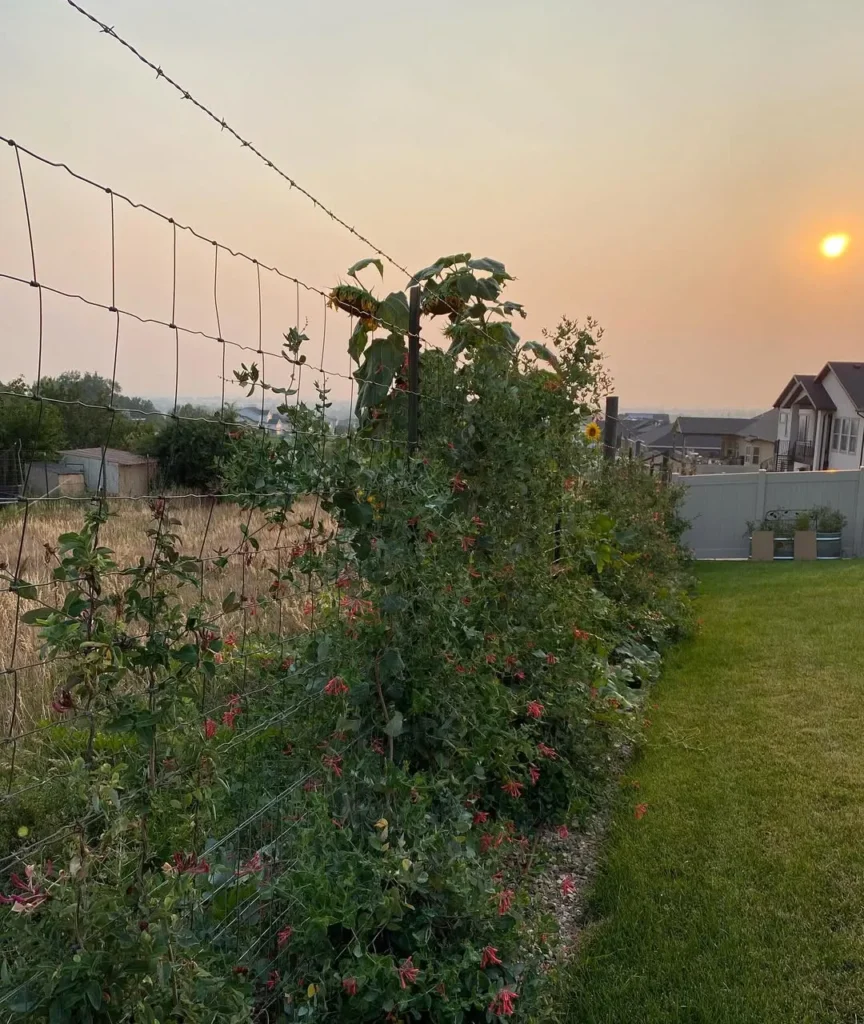
The Inspiration: Honeysuckle vines winding over tumbledown old English stone walls in cottage gardens dotted across the Cotswolds, plying fragrant, tubular blooms luring hummingbirds at dusk. Childhood memories hold sway over the plucking of flowers for sweet nectar drips and the vine’s haphazard sprawl is an emblem of wild beauty constrained by order. These romantic climbers turned purely functional fences into living tapestries, where privacy met whimsy. But today’s gardeners are reviving this nostalgic tradition, directing honeysuckle to clamber along chain link and trellises to manufacture vertical privacy screens that buzz with pollinators and childhood wonder.
Why it Works: Sublime honeysuckle privacy fences bring together fast growth and pleasing scent. Natives such as Lonicera sempervirens grow quickly and can cover chain link or wire fences in just 1-2 years providing dense, up to 15 foot screening. They’re naturally twining so they thread themselves through a trellis, just pop a wooden or metal support in and gaps are automatically filled without continuous training up! Showy tubular flowers in scarlet, coral, or yellow are non stop from late spring into summer, attracting hummingbirds and butterflies while adding color. Semi evergreen in warmer areas for year round coverage. Unlike invasive Asian honeysuckle, native selections such as ‘Major Wheeler’ and ‘Dropmore Scarlet’ stay inbounds while providing excellent pollinator value.
Pro Tip: Opt for native honeysuckle species such as ‘Major Wheeler’ or ‘Dropmore Scarlet’ instead of invasive Asian types, which are less challenging to control. Space plants 5 to 6 feet apart near a sturdy wire fence or trellis. Early training of young vines horizontally to promote cordon filling and avoid bare bases. Water regularly during establishment and then enjoy drought tolerance, once established.
Wisteria Privacy Plants Fence
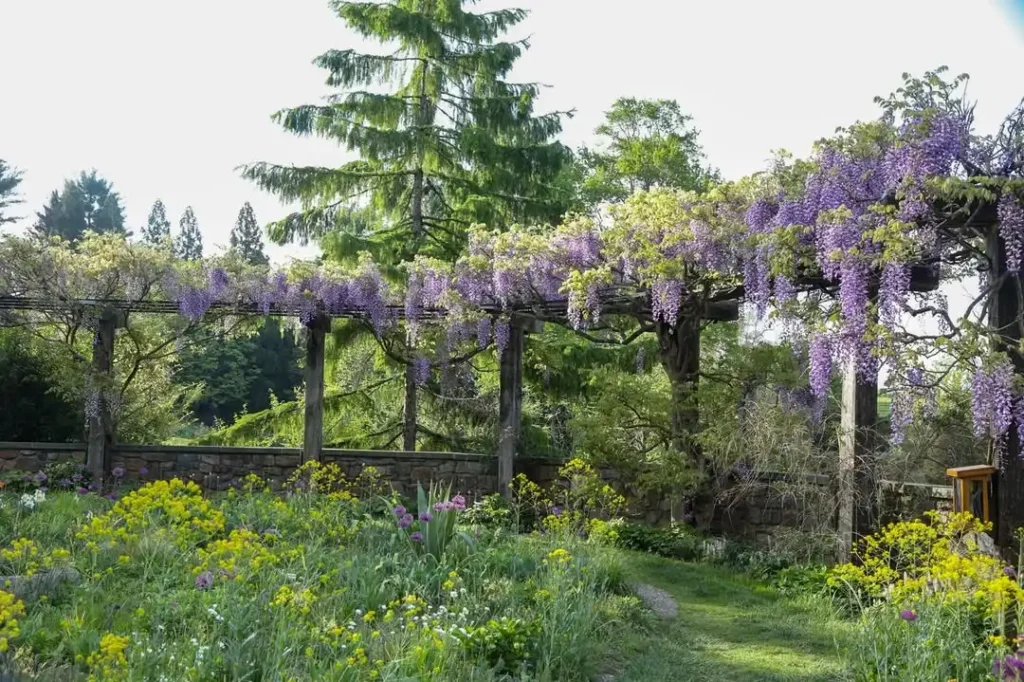
The Inspiration: Japanese temple gardens mastered wisteria pergolas hundreds of years ago, with the curtains of lavender blooms making backyard waterfalls from color and fragrance. Victorian estates used these romantic vines over iron arbors, pendant flower clusters sometimes drooping three feet long to turn gardens into purple dreams. Southern plantations grew wisteria on verandas and the flowers were said to grace a thousand nightgowns. Today’s gardeners are recreating this classic beauty, turning unsightly fences into stunning vertical gardens that reflect the horticultural finesse of ages and the romantic tradition behind it.
Why it Works: Wisteria privacy walls provide unbeatable visibility behind a shroud of blooms. Rapid growing vines rapidly cover fences, trellises, and even pergolas in lush leaves and twining stems creating a privacy barrier for the first season or two. The fabled spring blooms pendulous, 18-inch long clusters of flowers create amazing displays that can turn one’s property into a neighborhood landmark. Followed by rich compound leaves which provide excellent summer screening and shade. Woody stems contribute to permanent architecture. Cold hardy to zone 4 and drought tolerant once established, wisteria only needs something strong to lean on and not much else. The trees go through a spectacular seasonal cycle from naked winter branches to bursting spring blooms to leafy summer canopies, offering changing views.
Pro Tip: Opt for American wisterias, such as the ‘Amethyst Falls,’ rather than the aggressive Asian species that will grow more easily in your garden and flower earlier. Make heavy duty supports wisteria gets heavy and needs to be securely held up by wire or sturdy structures. Space 10-15 feet apart in full sun. Prune twice a year: Summer pruning controls size, winter pruning encourages bloom for the following spring.
Big Bluestem Privacy Plants Fence
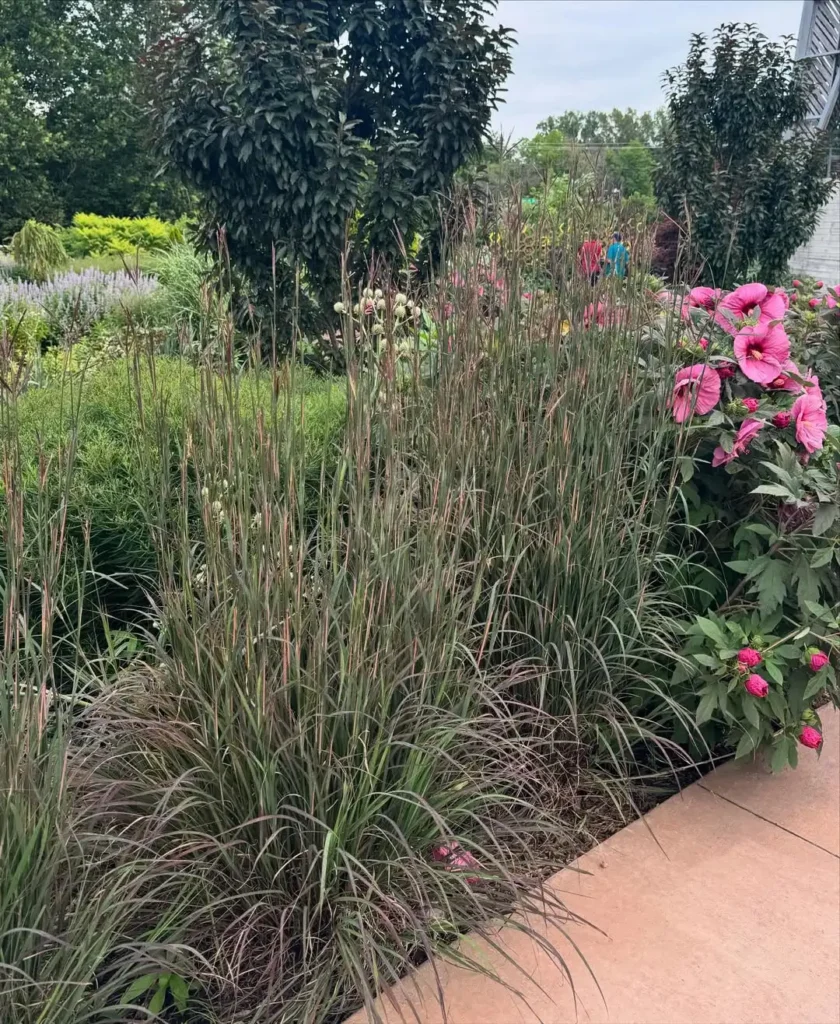
The Inspiration: American tallgrass prairies once extended to the horizon, and Big Bluestem grass dominated the heartland landscape with its silvery blue upright stems that cascaded like waves of an unseen salty tide over millions of acres. Native Americans named it “turkey foot” for its characteristic seed heads that indicate the rhythms of each season. Not only did the settlers of the prairie come to see in these tall grasses natural boundary markers which roxking chair, made from a single piece its copper autumn changes announced that it was time for harvest. Today’s mindful gardeners reclaim this native heritage, planting Big Bluestem borders to link suburban yards with the lost grassland past of North America and weaving naturalistic privacy screens suffused with ecohistorical significance. Creative Fence Plant Ideas for Privacy and Beauty
Why it Works: Big Bluestem privacy screens achieve native resiliency and appealing design. Clump-forming warm season grasses 6-10 feet in height that form effective summer screens and grow across a 2-3 foot area. Foliage emerges silvery blue, changing to a stunning copper red throughout the fall, adding all season appeal. Excellent drought tolerance and adapts to a variety of soils sandy, clay or loam soils: maintenance free when established no trimming or mowing needed. Purple “turkey foot” seed heads attract songbirds and provide winter food sources, in addition to nesting habitat. The deep roots keep the soil from eroding, while also replenish it. Unlike woody shrubs or other hedges that can take years to establish, Big Bluegrass fills in within a few seasons in zones 3-9.
Pro Tip: Plant Big Bluestem in a mass spaced 2-3′ apart for dense screening or closer for quicker coverage. Grow in full sun with well drained soil for optimum height. Water throughout the 6 week establishment period, then to once a week until roots are established. Leave seed heads standing through winter for wildlife, then cut to the ground in late winter before new growth appears.
Switchgrass Privacy Plants Fence
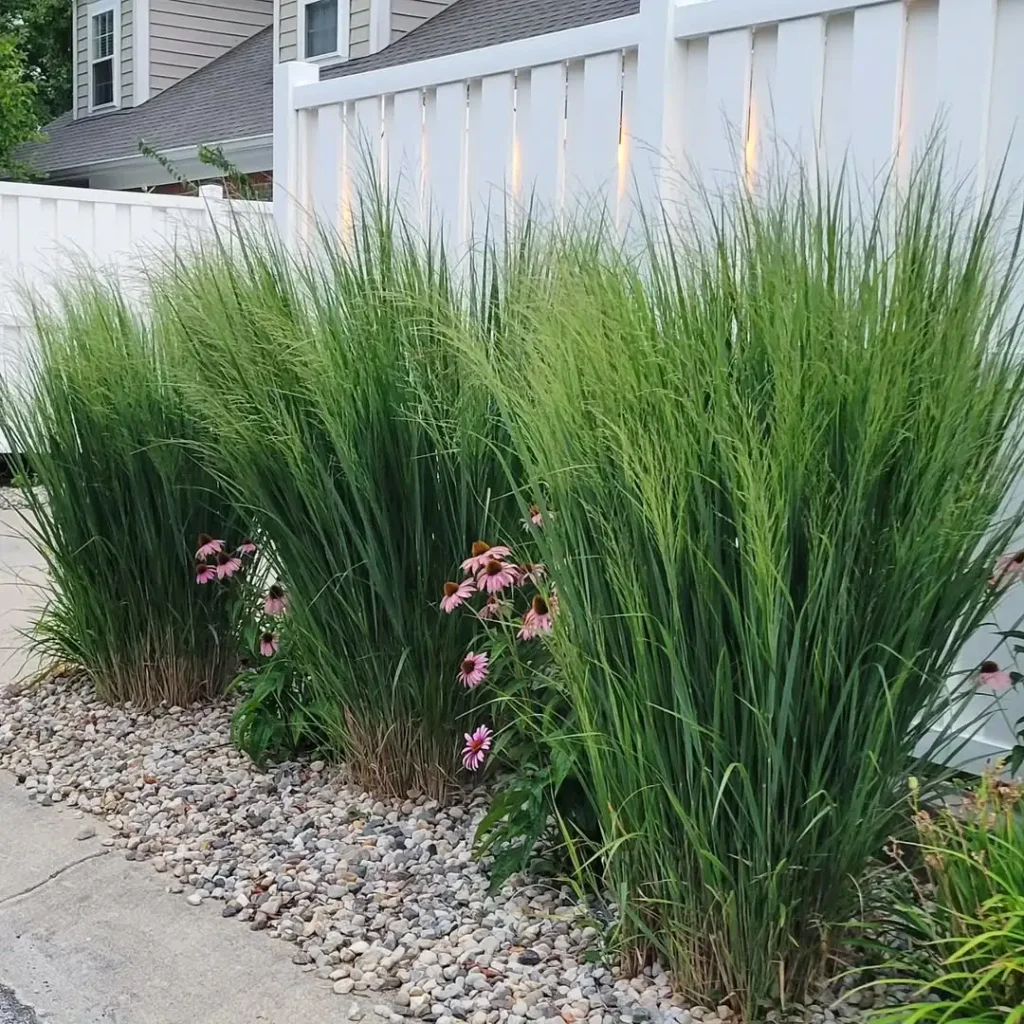
The Inspiration: Once the North American prairies flowed like grass-caped seas, switchgrass with its seed plumes of bronze buckled over horizons with sighing waves of copper fire. Native American tribes wove this sturdy grass into sacred rituals, acknowledging its powers of renewal by fire and drought. Frontier settlers observed its annual metamorphosis measure time’s passage emerald spring foliage, airy summer flowers, burgundy fall beauty. Today’s conserve gardens practitioners resuscitate the indigenous champion to create switchgrass borders that sift the noise and urgency of modern life and link urban places to lost prairie ideals, preserving ecological intelligence in living screens.
Why it Works: Native switchgrass privacy screens offer a combination of native toughness and architectural beauty. Erect forms such as ‘Northwind’ grow 4-8 ft. tall with straight up columns, making vertical hurdles for tough winter winds. Their ‘clumping’ habit ensures that they make ideal screening plants when planted 2-3 metres apart and if you plan to have a feature plant, contrast or even complement their foliage with the purple of grasses like Dianella. Structural drought tolerance and deep tap roots (down to 10 feet) makes the sward maintenance free, erosion preventing and runoff filtering. Unlike woody hedges, which need constant clipping, switchgrass requires only an annual spring cutback. Its airy seed heads attract songbirds and offer nesting habitat while sequestering carbon.
Pro Tip: Select columnar varieties, such as ‘Northwind’ or ‘Totem Pole,’ for the most stiffly vertical growth and ultimate screening power. Plant 2-3 feet apart for space filling coverage. Best when planted in full sun and well-draining soil. Water regularly until established, then water sparingly. Leave standing through winter for wildlife and aesthetic appeal; you can cut back to 6 inches in late winter before new growth appears.
Spicebush Privacy Plants Fence
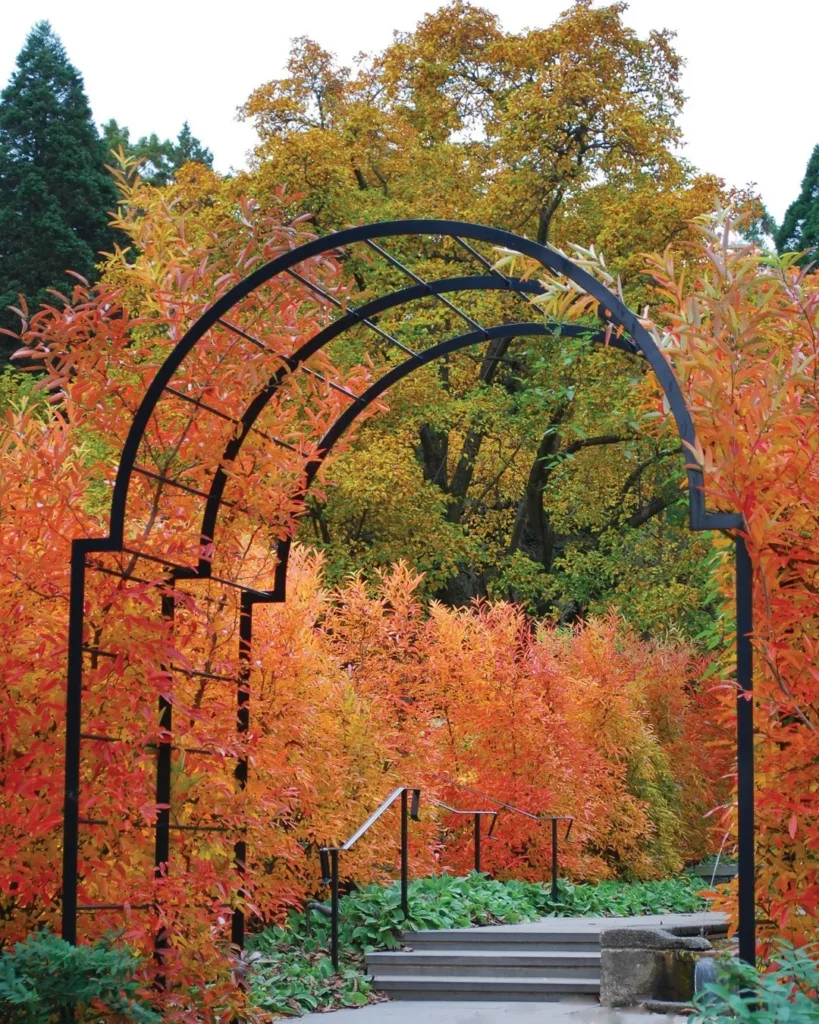
The Inspiration: Spicebush’s spicy scent falls softly on the noise of Appalachian forest understories, where Native Americans once ground the aromatic leaves into a medicinal tea and crushed berries as subs for allspice. Early colonial settlers traveled through the woods along routes marked by these golden blooming shrubs, whose flowers signaled spring awakening before most other plants even stirred. Naturalists cherished groves of the spicebush, home to spicebush swallowtail caterpillars and the glorious dappled shade through which their brightly winged counterparts weaved. Today, native plant advocates revive these ecological havens and landscape spicebush hedges that transform shadowy property edges into green corridors combining privacy with conservation.
Why it Works: Spicebush privacy fences grow readily where other shrubs falter, in shade and moist spots along property lines. Growing 6-12 ft.l with the same spread, these native deciduous shrubs offer excellent screening when planted 4-8 ft. apart. Early spring yellow flowers offer welcome early season nectar and bright red fall berries feed migrating songbirds once golden leaves have fallen. Deer and pests will not bother the aromatic leaves. The ecological bonus: spicebush is the only host plant for spicebush swallowtail butterflies, allowing them to complete their life cycles. Low maintenance and tolerant of a range of soil moisture levels, spicebush is perfect for low maintenance native borders.
Pro Tip: Space spicebush 4-8 feet apart for naturalized borders, or closer together for tight hedges. To produce berries you will need to plant male and female plants we recommend buying four plants for diversity of gender. Plant in partial to full shade conditions in a rich, woodland soil that has been amended with leaf compost. Mulch at the base to keep moist and water during establishment.
Buttonbush Privacy Plants Fence
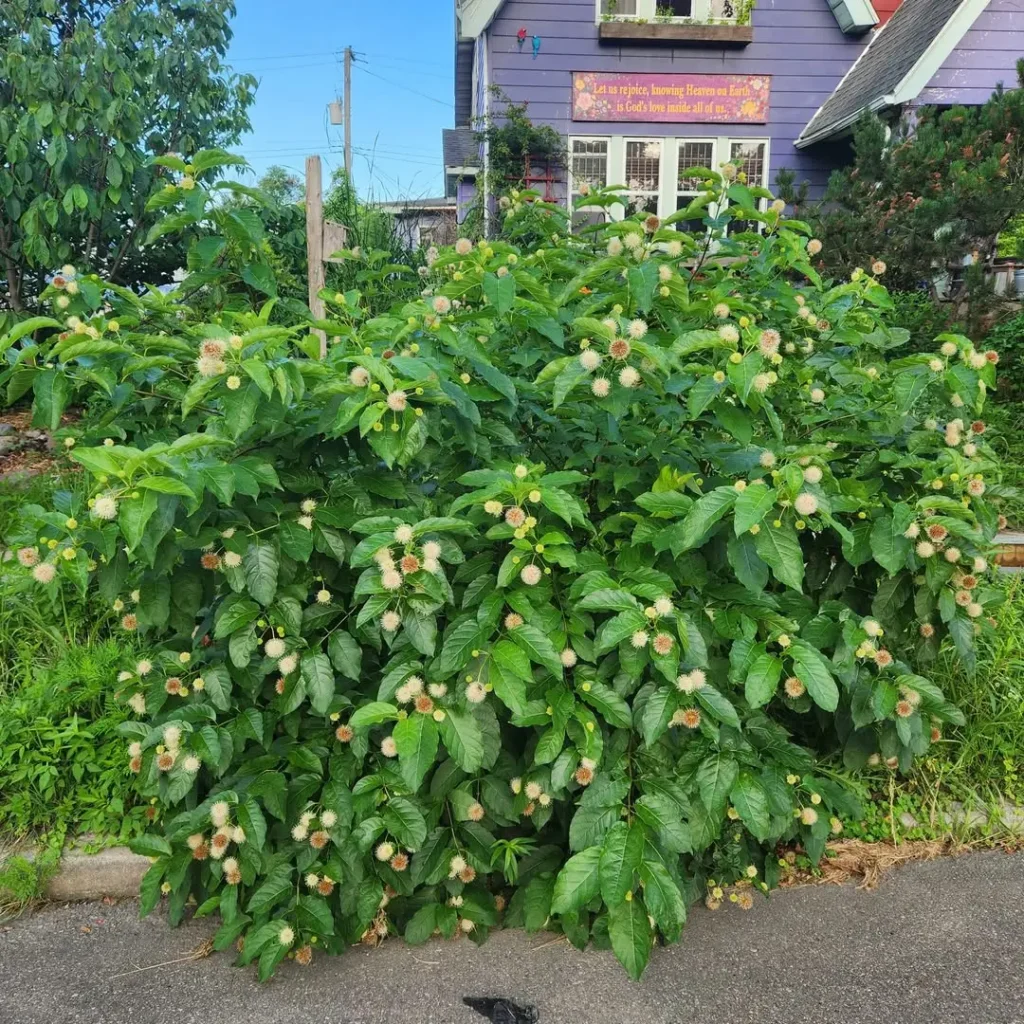
The Inspiration: Wetland edges throughout America are alive with the round white flowers of the buttonbush, their pincushion form drawing clouds of butterflies and hummingbirds to water’s edge. These honey-scented balls of bloom have long been a flannel shirt clad adventurer, enthusiastically lighting up swamp margins and water’s edges throughout summer. ” Colonial naturalists were amazed at how wildlife songbirds nesting, waterfowl seeking cover, pollinators gorging themselves flocked to buttonbush thickets. Today’s rain garden enthusiasts are reviving this lowland native, converting soggy property lines into lush privacy screens and turning a water problem into an ecological windfall evidence that problem areas can bloom as elegant solutions.
Why it Works: Buttonbush privacy hedges thrive where other shrubs go to die we are talking about wet, poorly drained areas that stay consistently moist or get standing water. These native deciduous shrubs can grow 6–12′ tall with dense branching, making a good screen when plants are set 4–12′ apart. Those little white globe-shaped flowers will pop open and stay in bloom from late spring through to early fall, releasing a sweet honey scent that lures an outstanding variety of pollinators including butterflies, bees and hummingbirds. Medium fast growth enables you to create a fence in 2-3 years. The ecological extra: outstanding wildlife value with its seed heads continuing to feed waterfowl and songbirds throughout the winter, and fairly deer resistant. Highly adaptable to difficult sites, buttonbush requires little maintenance and grows well in compacted, acidic soil.
Pro Tip: For privacy hedging, space your buttonbush’s 4-8 ft. apart in regularly moist to wet conditions. They tolerate shallow-standing water and are well suited to rain gardens or pond edges. Grow in full sun to partial shade in acidic soil. Prune in late winter before new growth appears to shape or rejuvenate buttonbush flowers on current season’s wood, so you won’t lose a year’s bloom if you prune.