
Your front garden wall is your house’s handshake with the world it’s the first thing that people see, and it constructs an important first impression of your home. Whether it’s a full garden overhaul or a simple design match to accentuate your outdoor borders, give you home plenty of curb appeal with the ideal wall to add style as well as function. Front garden walls serve as more than just property lines. They offer privacy, mitigate street noise, form microclimates for sensitive plants and provide structure in flat landscapes. For homeowners, they are a best investment in terms of both resale value and aesthetics. Janet Dunn The beauty of a garden wall is that it can be whatever you want it to be from traditional brick and stone, to modern render or more creative solutions, there’s a wall to suit every architectural style and budget.
white rendered wall
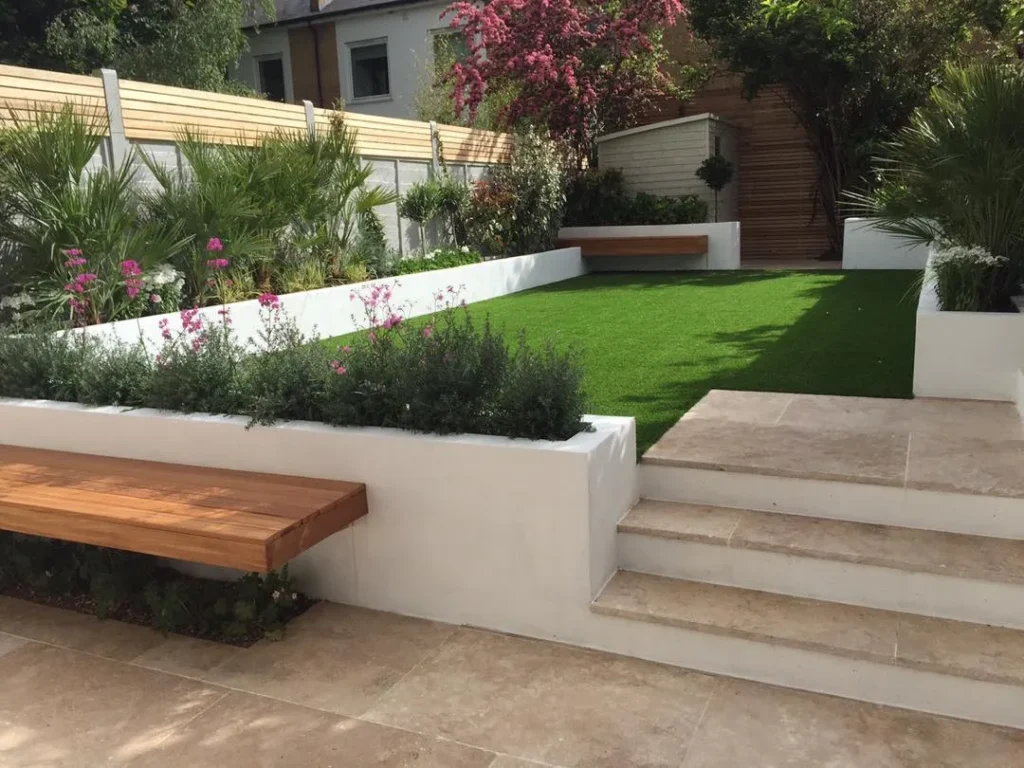
The Inspiration : Cool white rendered walls evoke the elegance of Mediterranean coastal villages, where limewashed surfaces threw back fierce heat and kept houses cool. For Greek islands and Spanish pueblos perfected this look centuries ago, establishing clear boundaries with crisp edges that allowed rich bougainvillea and terracotta pots to pop against the clean backdrop. Now’s homeowners are falling in love with this classic look to add a touch of European style and light reflecting elegance into their front gardens.
Why it Works : Painted white walls really do bounce light in shady front gardens, reflecting sunshine on to surrounding plants and brightening up the outdoors. The simple lines and balanced proportions work perfectly with everything from traditional to modern architectural styles. The cost of a rendered finish is less than natural stone, and this treatment provides good weather protection and maintenance: a simple pressure-wash restores the new-look surface. The neutral plane shows off your planting choices, so colorful flowers and foliage look like the stars. White walls equally, help to provide the illusion of space if you have a small front garden; by linking with your home’s façade, allowing your eye and mind to travel further.
Pro Tip : Opt for breathable lime render instead of ordinary cement and you’ll enjoy better moisture control, as well as natural texture. Opt for a matte or eggshell finish instead of glossy it does a better job camouflaging the little imperfections and won’t throw ugly glare. To keep water out and double the life of your wall, secure a coping stone or metal flashing to the top.
nature front wall garden
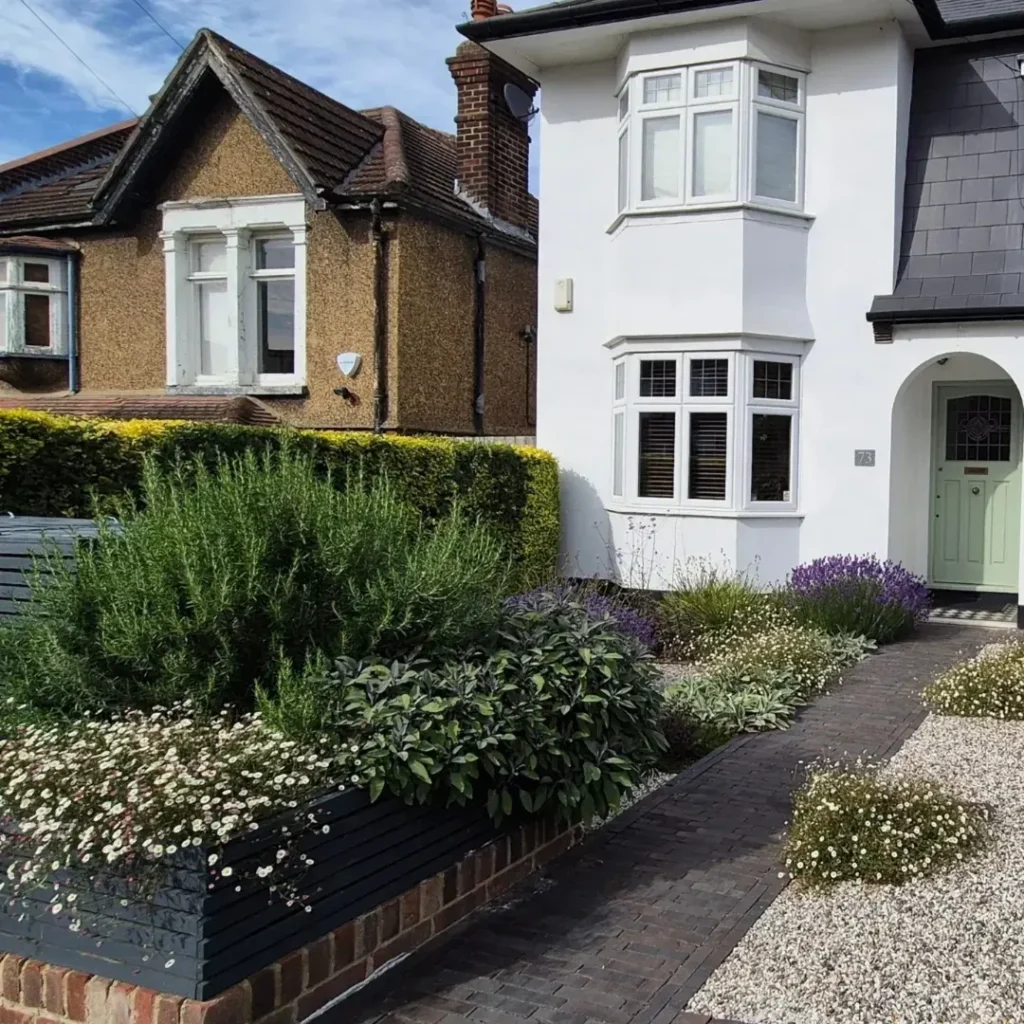
The Inspiration : Nature front wall gardens can be traced in history to walled courtyard gardens the ancient Persia and Rome, where vertical greenery tempered hard stone perimeters and linked residents to nature. Today, they turn mundane facades into living canvases in an echo of Tudor compartmentalized walled gardens that impressed guests while providing sanctuary refuges.
Why it Works : Garden environments in nature front wall Achieving health and the envirnoment There are many reasons to use one of our gardens Go greener As an alternative to using plain painted walls, designer finishes or worse still concrete with brick layers in between. Not only Enrich the air through filtering dust particles or smoke out of the air, but help balance room temperature, by Insulating against heat and cold. And more importanly. Reducing sound: Transulation blocks most of the noise. The biophilic design sows (?!) to both physical and mental health by reducing stress, boosting mood and increasing cognitive function through creating a sense of connection to the natural world right in the city. In a practical sense, they optimize space with vertical growing, cloak ugly utilities and contribute an overhaul to curb appeal. Studies indicate that the proximity to greenery increases levels of dopamine and serotonin, while at the same time decreasing anxiety and mental fatigue.
Pro Tip : Consider having an automated irrigation system, installed with backup water sensors to avoid dry patches and being overwatered — which tends to be the most frequent cause of death for vertical gardens. 10 Position plants with the same water and light requirements together and select local species that are easier to maintain. Once a month, prune the crowns so they don’t get too crowded and look imbalanced on the wall.
front brick wall garden
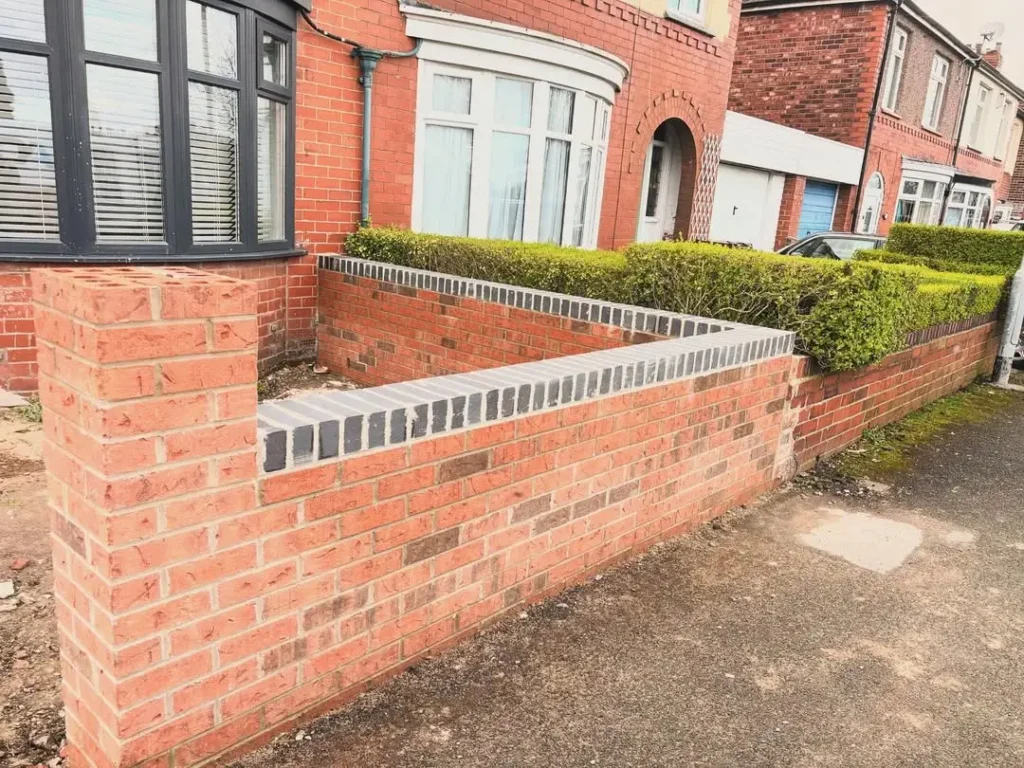
The Inspiration : Front brick wall gardens are a callback to Victorian-era walled kitchen gardens that were a fixture of grand estates throughout England. These tall brick boundaries provided microclimates for rare and precious plants, dividing them from the productive areas of gardens to ‘pleasure’ grounds. Front brick walls are a case in point today: those charming time-honest walls manage to turn boring fences into heritage-endorsed design statements that do their bit for good looks and greenery.
Why it Works : Brick Paving Brick walls come with extreme durability and will last through all types of weather for years without the need for heavy maintenance & granite cobbles add value to your property. More broadly, the thermal mass of the material holds enough heat to keep little microclimates warm that can shelter tender plants and extend growing seasons. Brick is an excellent insulator and sound barrier, creating peaceful garden hideaways. Its aesthetic flexibility complements all types of architecture — classic red brick sets off greenery, and painted models can match a favorite color scheme. It’s no wonder these symmetrical designs, with artisan details, are a feast for the eyes and provide exceptional curb appeal. Brick also accommodates climbing plants very well, providing strong vertical growing structure.
Pro Tip : Never forget to install coping stones over the top of your brick wall, as this will protect it from water damage and help it last longer. These caps guard against the rain by channelling it away from mortar joints, preventing water damage. Opt for beautiful natural stone, cost-effective concrete, or solid brick veneer to complete the look and then use mortar to get in place.
Cottage Garden Wall
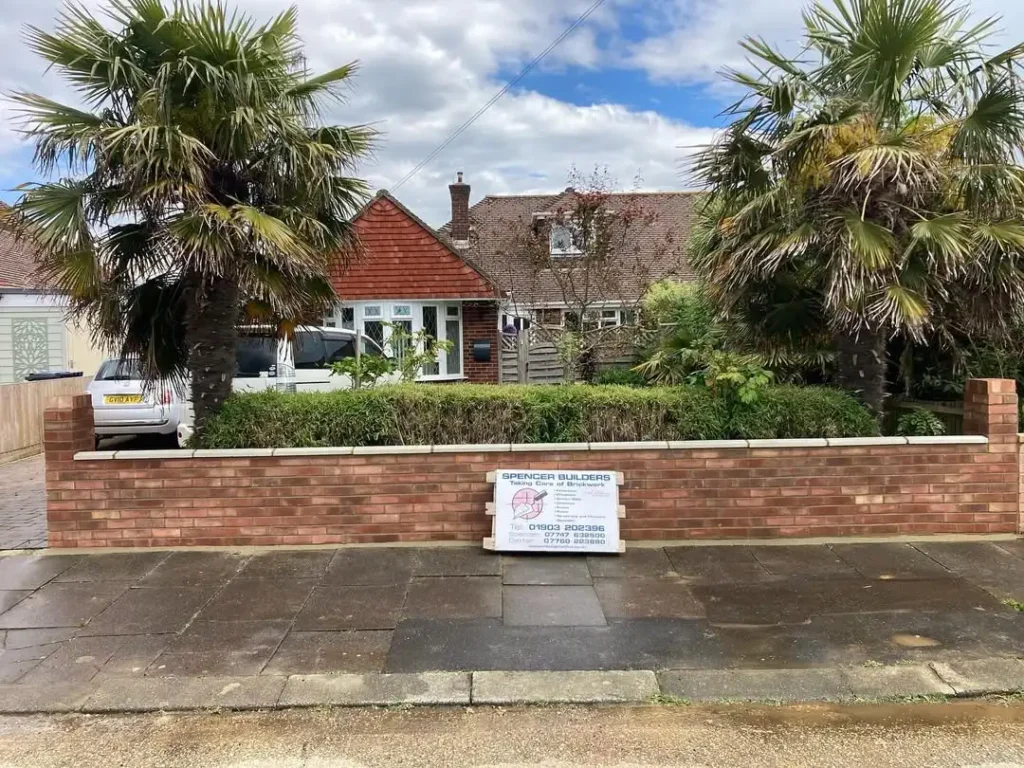
The Inspiration : Cottage garden walls owed their charm to those of the English village lanes, where low stone walls or brick borders were kitted out in hollyhocks, foxgloves and rambling roses. Weathered materials, mossy joints and the hand-laid stones themselves suggest a loving imperfection like something that a grandparent quietly took care of, making an ordinary boundary into a storybook frame for everyday life.
Why it Works : A Cottage Garden Wall succeeds in part because it removes the difference between structure and softness, providing climbing roses, clematis and ivy with a solid backbone that looks as carefree and inviting as they do themselves. The fence blocks off view and wind, forming a snug microclimate where more tender vegetation can grow and blossom for a longer season. Aesthetically, the juxtaposition between the rough stone or brick and blooming flowers lends depth, texture and a romantic, timeless feel that both period homes and modern cottages find so irresistible. Emotionally, this style is one of welcome and warmth it turns the frontage of a house into a lived‑in, story-rich, human‑scale space.
Pro Tip : For a Cottage Garden Wall: Pick one main wall material, keep the color palette tight, and let plants bring the variation. Train climbers on discreet galvanized wires set at easy diagonals. This keeps the wall’s integrity, protects plants during storms and makes it much simpler for seasonal pruning and replanting to be done.
evergreen white shrub wall
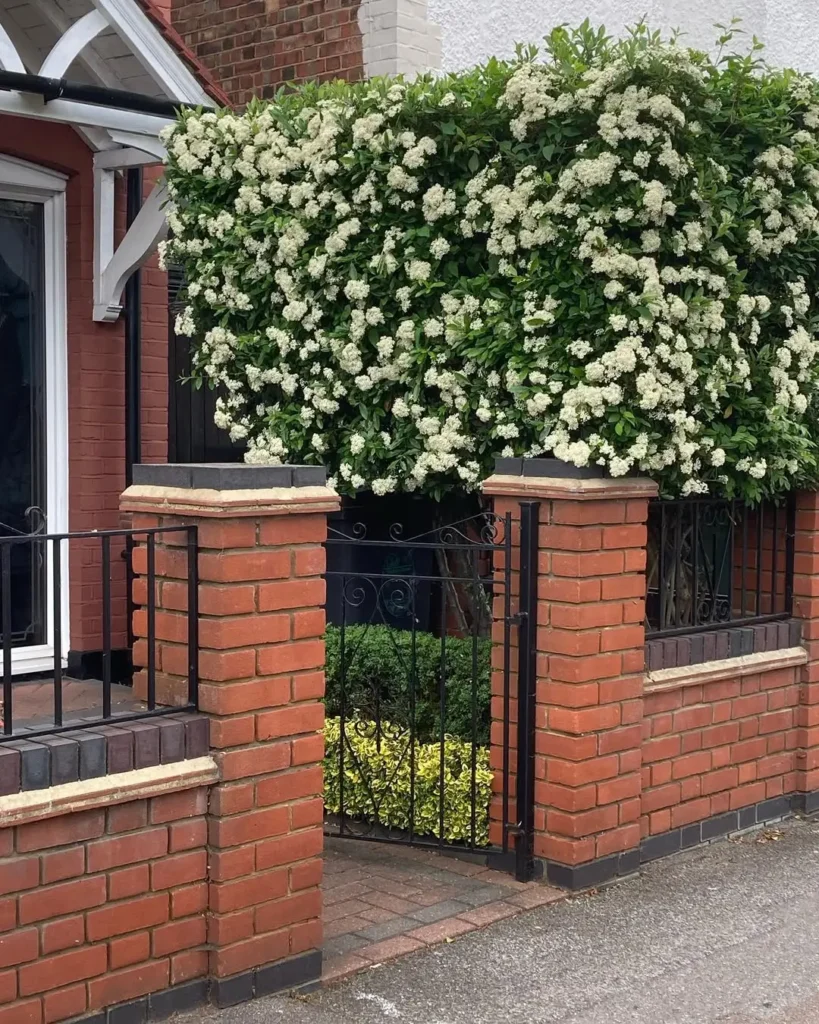
The Inspiration : An evergreen white shrub wall is living architecture: a year-round, clipped backing to be dusted with clouds of blossom in every season. Picture dense myrtle, gardenia or white-flowering pittosporum creating a softly perfumed edge that, like the formal borders of an estate, fades with more gentle warmth against brick, stone or modern facades.
Why it Works : An evergreen white shrub wall is successful because it provides both structure and softness in a single sweep. It provides privacy and windbreaks plus noise attenuation with the denser plant foliage, but it also makes frontages more plain. White flowers work like “highlight” tones in any light, brightening dusky entries and visually inflating small quartiers. Evergreen leaves maintain the wall’s visual solidity year-round, preventing it from having the bare look of a deciduous hedge. A single variety of shrub repeated gives a smoothing, unifying rhythm that is suitable with both traditional and modern houses. The delicate scent of many white-flowering shrubs adds olfactory pleasure, too, so a simple boundary becomes a welcoming note on the daily routine.
Pro Tip : To get a thick, hedge-like wall more quickly, stagger plants in two rows, planting them closer together than the label advises. Select plants rated 1ft (30cm) or so above your desired final height, then keep them in check with light, regular haircuts: you’ll ensure foliage is full and flowers are generous without making the outline of your wall be anything less than elegant. front grass wall

The Inspiration : A front grass wall is akin to the bridging up of a sunlit meadow, and enfolds the entry in soft texture rather than hard.” Imagine the gentlest breeze ruffling them like so much golden silk in the evening sun, and calling to mind prairie-style landscapes only lining your doorway with a modern, sculptural and almost art-installation-like presence.
Why it Works : A grass wall in the front succeeds because it is a marriage of architectural clarity with movement and softness. Tall, ornamental grasses grow into tight vertical screens that obscure neighbors and provide privacy while still allowing filtered light and air to pass. Their fine, fountain-like leaves move with the wind to add a relaxing element that helps soften views of neighboring streets or driveways. Color and seed heads that change with the seasons provide interest without being fussy, and many modern grasses are drought-tolerant and low-maintenance compared with clipped hedges. Evocatively, the wall speaks relaxed contemporary elegance and whispers ‘nature-loving, design-savvy home’, before visitors even make it to the door.
Pro Tip : Plant a repeating matrix of only one or two grass types, such as in this narrow raised bed with spaced-out, straight architectural line. Put in a simple drip line at soil level, and cut all clumps back hard once a year (in late winter) so fresh growth erupts in an attractive pose: unsoiled by last year’s dead bones, tall and uniform.
flowering front wall garden
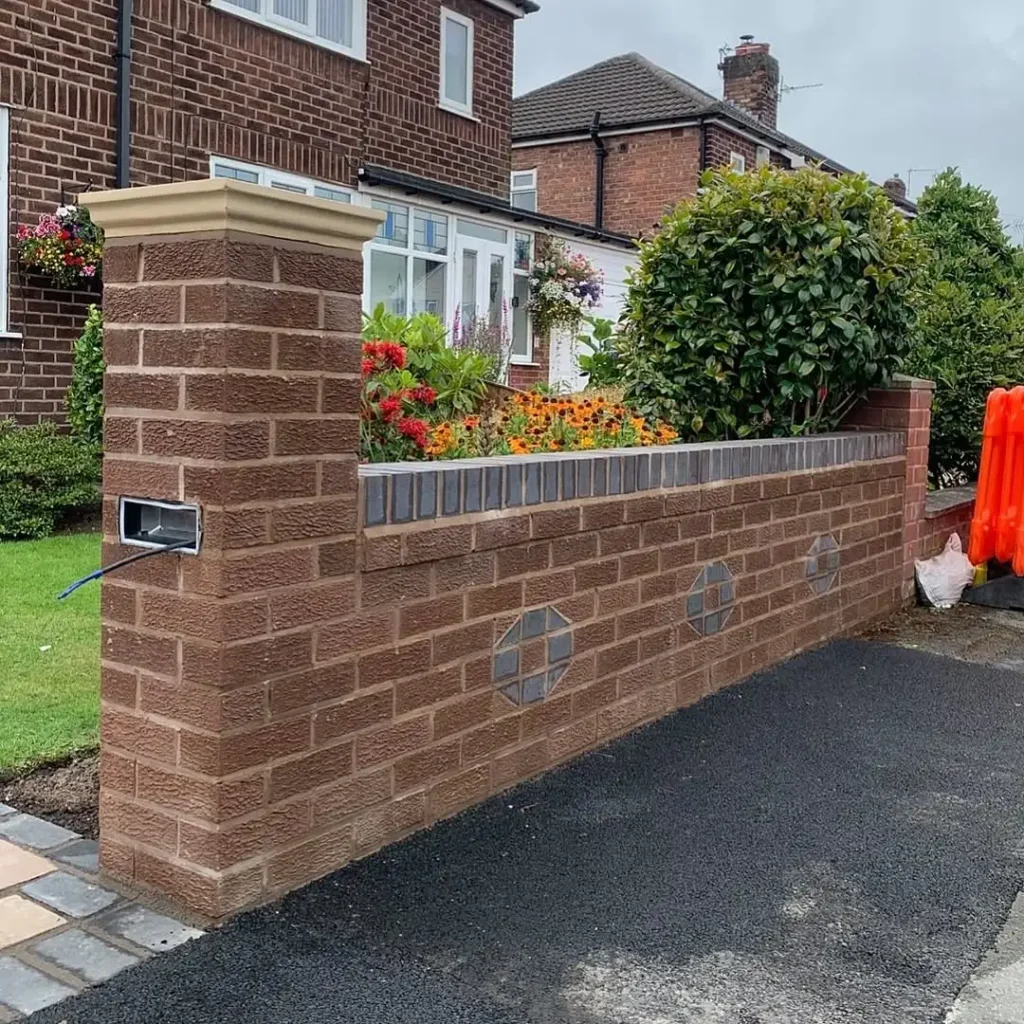
The Inspiration : A wall garden of climbing roses unfurl the old European romance of streets where stone walls cede to roses, jasmine and tumbling geraniums. Blasts of color at eye level welcome you in like a handwritten note, transforming an everyday edge into a living postcard that gets altered by the moment and passing bee.
Why it Works : A blossoming front wall garden is successful because it layers structure, color and scent into one narrow band of space. The wall offers a vertical element and background, while flowering climbers, shrubs and perennials provide depth and interest, attracting pollinators and softening hard edges. Repeating colors and plant forms up the wall pulls the eye toward the entrance, leading visitors subtly. With repeat blooms throughout the year, curb appeal hardly ever fades in modest front yards. Emotionally, this mix of fragrance and texture and shifting color palette provides an inviting threshold that feels personal and generous — as though the garden sends a message of care and hospitality before anyone has even rung the bell.
Pro Tip : Plant in three tiers: wall-trained climbers at the back, medium flowering shrubs in the middle and low edging flowers at the front. Opt for a narrow palette of two or three bloom colors and stretch it, so that something is maxing out in color from spring through summer to fall without the garden looking chaotic.
curved grey stone front wall garden
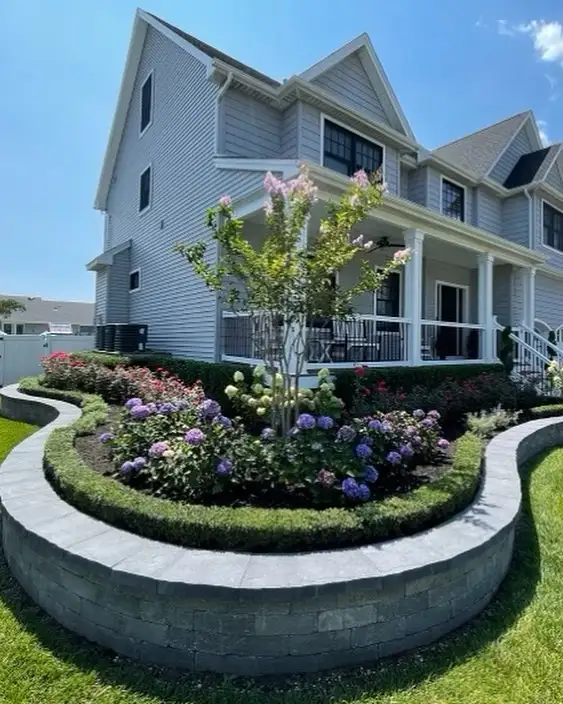
The Inspiration : A curved grey stone front wall garden has the soft light of a hillside path in a European village, its weathered stone arcing around flowering niches and grasses. The curve calls to be followed, blushing the entrance and turning your front edge into a sculptured ribbon that holds plants in timeless repose.
Why it Works : A curvy grey stone front wall garden does work because the.. um, macadamia dwarf snow is a sweet curve and eye or feet are led to its entrance without questions. Grey stone acts as a pure, centered background for foliage and flowers to exist in an amplified and uncluttered way. The curve also softens the sharp architectural lines,” said Ms. Donegan, as she pointed to a low wall that defines planting beds, holds earth on inclines and serves as an easy perch for sitting. Textured stone ages gracefully, acquiring character with time. Emotionally, cool grey plus natural has a feeling of being permanent, tranquil and discreetly luxurious as opposed to “look at me” luxury.
Pro Tip : Design elements of a front wall garden using grey stone should include the curve: On the ground mark with a hose or rope, then stand back from the street to view it at different angles. Keep the curve wide, not wiggly, and duplicate one kind of stone for a calm, coherent high-end appearance.
bougainvillea flower front wall

The Inspiration : Imagine sun-splashed Greek and Spanish villages, where tumbling bougainvillea have turned white-washed walls into living masterpieces. The colourful climber was originally found in Rio de Janeiro by French explorer Philibert Commerçon in 1768, and has since become a symbol of Mediterranean appeal. The magenta flowers against time-worn stone give such an emotional, timeless visual.
Why it Works : From an aesthetic and privacy standpoint, bougainvillea front walls offers a range of advantages that make them really work. They need very little water once established and like it hot and dry with a minimum of at least six hours of light each day. The thorny, dense cover forms a natural security fence that is not only stunning but also burglar-proof, discouraging intruders while adding a layer of privacy. The fast-growing vines provide color throughout the year with red, pink and magenta bracts. It’s drought-tolerant, which is appealing for the busy homeowner because it only needs an occasional trim after bloom. They are thus very suited to front walls, a perfect mix of beauty and practical security.
Pro Tip : Attach strong horizontal wire supports or trellises prior to planting, with the wires situated 12-18 inches apart arrayed vertically across your wall. Gently tie the branches to supports with soft plant ties, training growth sideways first and then upward. This makes for a dense coverage, and promotes even more blooming points throughout your entire front wall.
rock wall garden
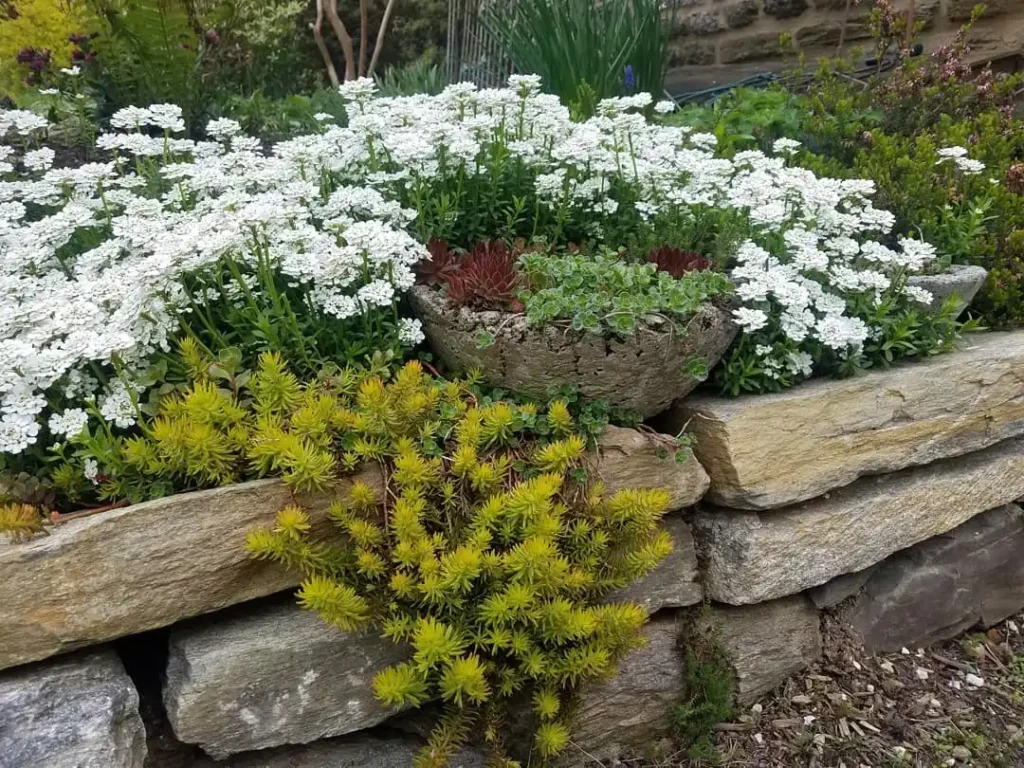
The Inspiration : Rock wall gardens echo ancient terraced hillsides, where farmers chiseled beauty and survival from sheer, stony slopes. Sculptured rocks hold small patches of green, evoking alpine cliffs and ancient fortress walls. Each crevice planting seems as if you are tucking life into venerable geology, and the effect is a layered, storied scrim against which to stage your home.
Why it Works : A rock garden wall does even better by integrating structure, drainage and microclimates into a single living feature. Cracks between stones allow for excess water to drain away while keeping just enough water for drought resistant plants thereby minimizing the risk of rot and maintenance. The stone mass retains daytime heat and emits it slowly at night, shielding roots and lengthening the growing season for many species. Vertical planting pockets make use of small spaces, transforming blank walls into active, layered ecosystems. Aesthetically, the combination of rough stone and fine foliage lends depth, texture and interest throughout the year. Emotionally, it is timeless and grounding; a link between modern gardens and ancient handcrafted landscapes.
Pro Tip : Tilt rocks slightly back to give the plants a sunbathing posture, leaving staggered, irregular gaps and filling them with a gritty mix of compost, sand and topsoil as you plant. This stops soil being washed away, helps with drainage and forms natural shelves for roots, offering ideal crevices for creeping thyme, sedums and alpines to grow.
simple green wall garden
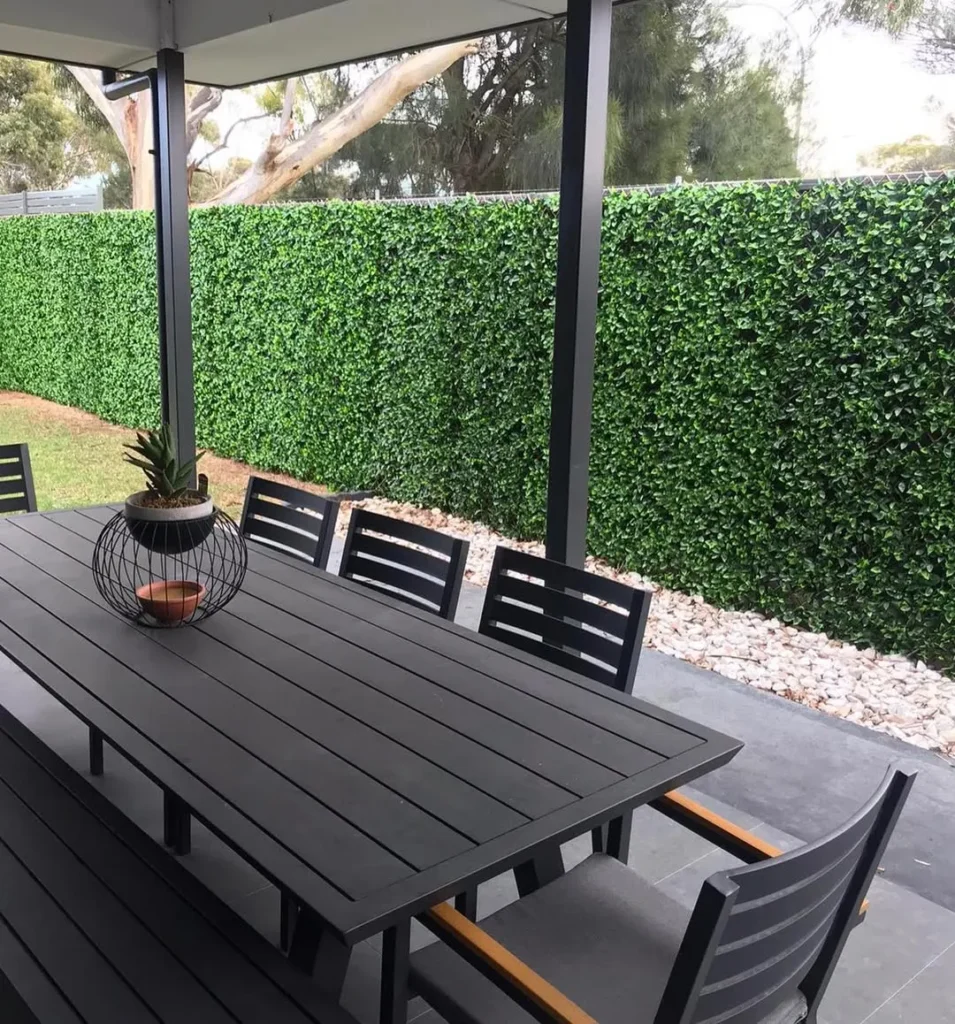
The Inspiration : And a simple green wall garden, seen in the picture above, well that feels like carrying the edge of the forest all up to your brickwork; softening those hard lines with living texture. It harks back to medieval cloister courtyards and ivy-draped town houses, where greenery pacifies chaotic streets. Every leaf is a murmur of rain, a shade for the breathing self in domestic life.
Why it Works : It doesn’t get much easier than a basic green wall garden, turning unutilized vertical space into productive cooling greenery and improving air quality, lessening the reflective heat back off lifeless masonry. The foliage layer muffles noise, provides privacy and visually enlarges small courtyards or balconies by directing the eye upward. Modular planters or pockets make it simple to swap plants, with premium soil and the ability to experiment with textures, from ferny or spiky vegetation to trailing vines. Regular, repeating green tones establish a calming and cohesive backdrop for outdoor seating or entryways. It is an emotional thing as well, these walls are a gesture of care, order and connection to nature which can make even the smallest urban areas into restorative, garden-like sanctuaries.
Pro Tip : Select three to five low-maintenance evergreen plants with similar light and water requirements and then plant them in a simple grid, rather than including dozens of unique varieties. Pairing compatible plants makes watering, feeding and pruning simpler, creating a calming sense of unity rather than the patchwork variety garden that so easily becomes cluttered.
frothy flowers garden wall
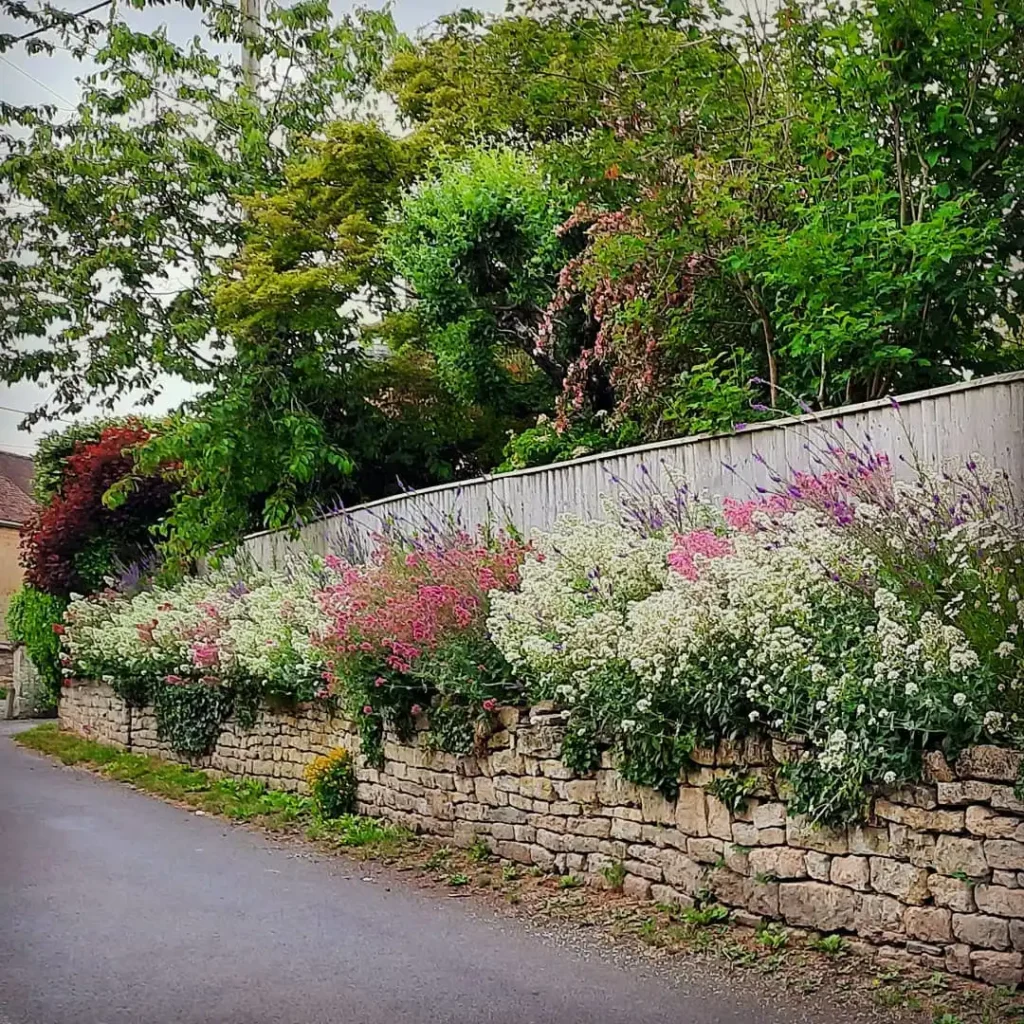
The Inspiration : Hedge A frothy flowers garden wall itself is like a long-lasting, blooming party, reminiscent of cottage borders stuffed with larkspur and valerian alongside airy roses. Soft, cloudlike blossoms soften edges and hard lines, transforming unadorned masonry into a romantic backdrop where petals tumble in pools of sweetness and hang like caught confetti after an endless garden party.
Why it Works : A frothy flowers garden wall creates interest by piling on many dainty flowers and delicate foliage to soften what can be a harsh vertical plane or an imperfect surface. Densely planted after all, hard and soft plants can help create a sense of depth and movement, catching the light and breeze as it moves; so that the wall feels like something alive rather than just being there. It’s all about long-lasting, colorful-blooming plants in this design; don’t expect to wait until the end of the first year to see if a flowerless plant becomes showy—it won’t. Generous plantings are hospitable to pollinators and beneficial insects, framing a door, path or seating area in an attractive manner. The abundance is emotionally a gesture of generosity and welcome, transforming a basic boundary into a whimsical, almost storybook tableau.
Pro Tip : Mix in at least one or two sturdy structural climbers, along with a handful of finer-textured “filler” plants such as see-through perennials or small-flowered climbers and repeat the mix all along the wall. Choose similar colors of bloom and flowering windows, so the whole surface fizzes with flower instead of looking patchy or sporadic.
red bricks wall garden
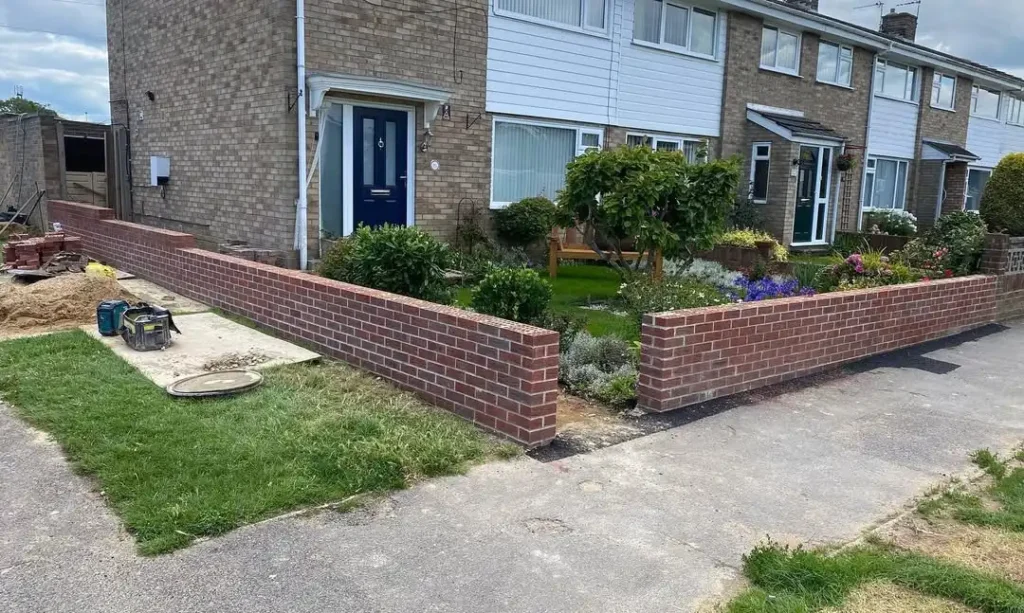
The Inspiration : A garden wall of red bricks seems, in the stone-walled gardens lining cloistered courtyards that have been sunbombarded by hoofs, like a conversation between industry and nature it’s an echo of an English walled garden. Weathered clay tones whisper the stories of kilns, craftsmen and rain, while green leaves and petals soften every line to take a hard boundary on a trip back in time into an embrace that is nostalgic and lived-in.
Why it Works : The wall of red bricks on this garden is so great because the warm, earthy background deepens greens and flower colors; even a simple planting looks curated and lush. The masonry absorbs daytime heat and then releases it over time, establishing a slightly more temperate microclimate that serves climbers, espaliers and wall-trained shrubs, ripening wood and extending bloom. Gaps between the mortar and ledges provide natural surfaces for self-seeding annuals and ferns to settle in and bring an incongruous spontaneity over time. Aesthetically, the screens are solid walls that screen off any wind, noise and views of neighbours. Emotionally, the combination of old brick and plants feels grounded, timeless and reassuringly relentless in a shifting urban or suburban streetscape.
Pro Tip : Take the brick’s warm undertone as your palette cue: deep green foliage teemed with white, apricot or rich blue flowers; hardscape accents (pots, furniture, metalwork) in similarly warm tones. This cohesive color approach prevents the space from feeling too busy and means that even a small planting can look purposeful and designed.
courtyard wall garden
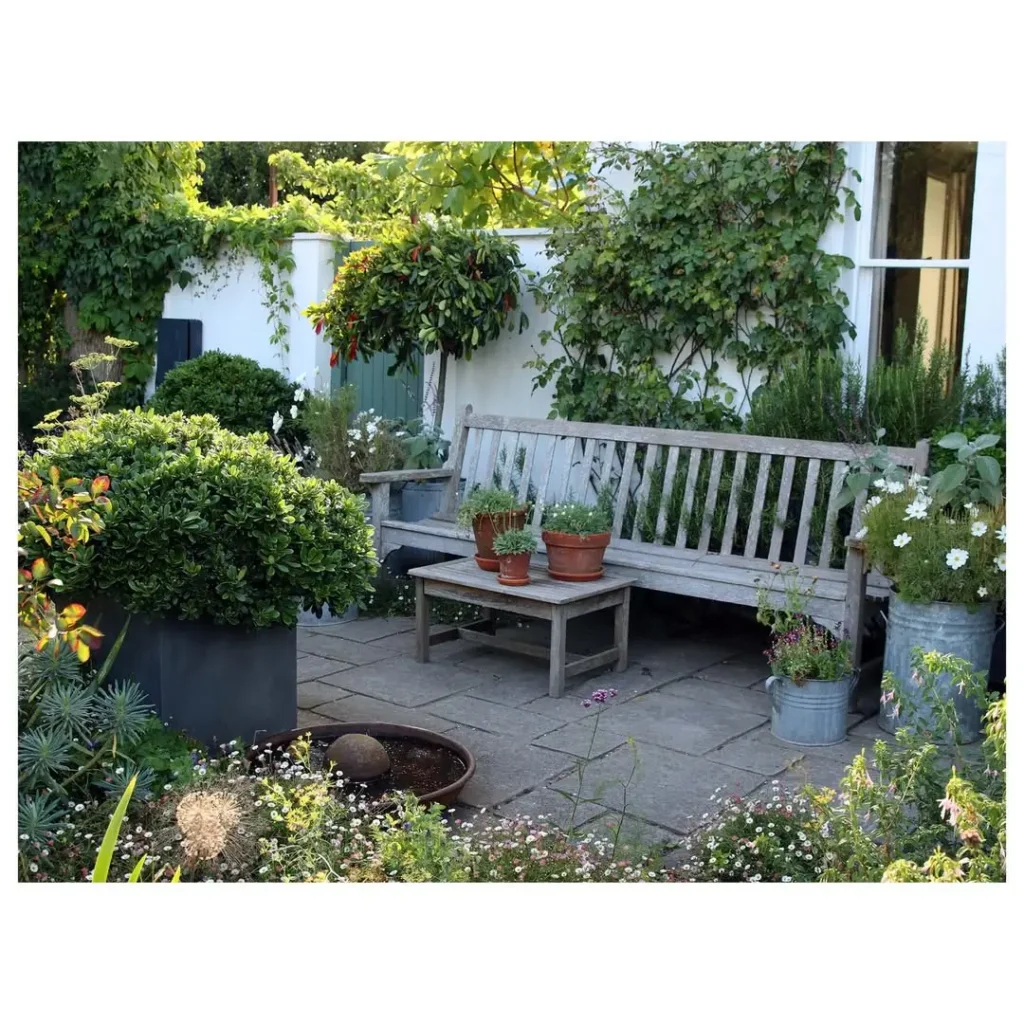
The Inspiration : The courtyard wall garden has the feel of a private cloister, evoking Roman atriums and Andalusian patios where life orbits around enclosed greenery. Sun-kissed walls are warm with vines, niches and pots that transform bare masonry into a living tapestry. It is the unspoken magic of stepping outside and feeling entirely cradled by plants.
Why it Works : A courtyard wall garden succeeds the way all walls succeed: By enclosing and protecting something, basking it in warmth and privacy. The masonry sucks up heat during the day and radiates it back into the environment at night, buffering temperature swings and extending the comfort of outdoor seating. Vertical planting climbers, espaliered trees, wall pots topsy-turvies limited square footage so the floor can be dedicated to dining or lounging. Walls also provide built-in support for lighting, water features and mirrors, enhancing greenery as well as evening ambience. Emotionally, the act of enveloping a space on three or four sides with foliage has an acoustic and visual effect it’s as if that courtyard had been turned into a secret garden even in densely populated neighborhoods.
Pro Tip : Design one “feature wall” to be the star, then keep the others quiet. Pair a bold vertical element — statement climber, espalier, niche fountain — with layered underplanting and gently illuminate it at night. This means the space doesn’t feel cluttered and people are encouraged to stay and chat in the courtyard.
plant-filled cottage front wall garden
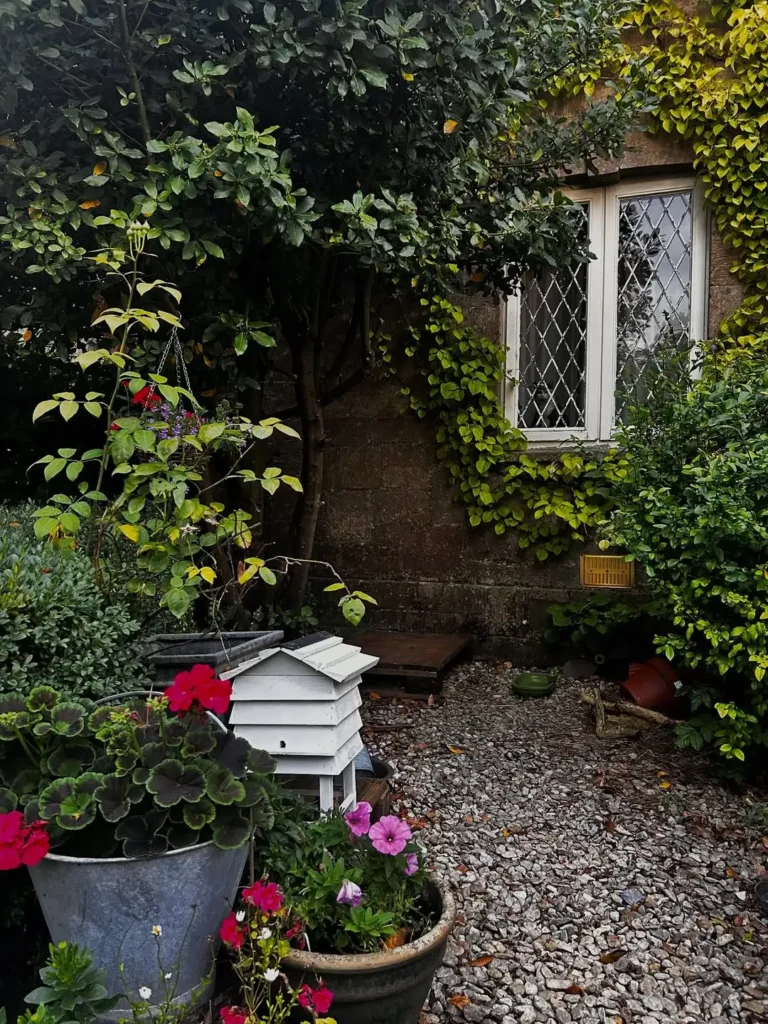
The Inspiration : A cottage front wall garden, filled with plants, that resembles one of those storybook English lanes where hollyhocks and roses and foxgloves lean companionably over low stone or picket boundaries. It’s as if the house is exhaling flowers into the street, and blurring public and private with a gentle, overflowing welcome that encourages passers-by to slow down.
Why it Works : Why It Works A cottage front wall garden is appealing because a thick, multi-layered planting turns an unadorned property edge into a lush little terrain that can become the filter and veil for hiding and revealing the building behind. Spires of tall stuff, mounds of medium-size perennials and trailing edges generate vertical rhythm that allows short spreads of real estate to feel richer and deeper. This seasonal succession — bulbs, perennials, annuals — keeps the wall garden interesting all year and courts pollinators as well as offers a little curb appeal that subtly enhances your property value. Psychologically, the casual profusion is generous and human, of a piece with caring but not too concerned about getting everything perfect. Passersby enjoy color, scent and texture at eye level, turning an unassuming frontage into a daily neighborhood pleasure.
Pro Tip : Anchor the wall with a few sturdy “framework” plants, like roses or hydrangeas, then weave in some self-seeders such as foxgloves, nigella or calendula and low edging herbs. Skip the bare soil: use groundcovers or mulch to discourage weeds, so that your beds look charmingly full rather than messy and unkempt.
stone leaf front garden
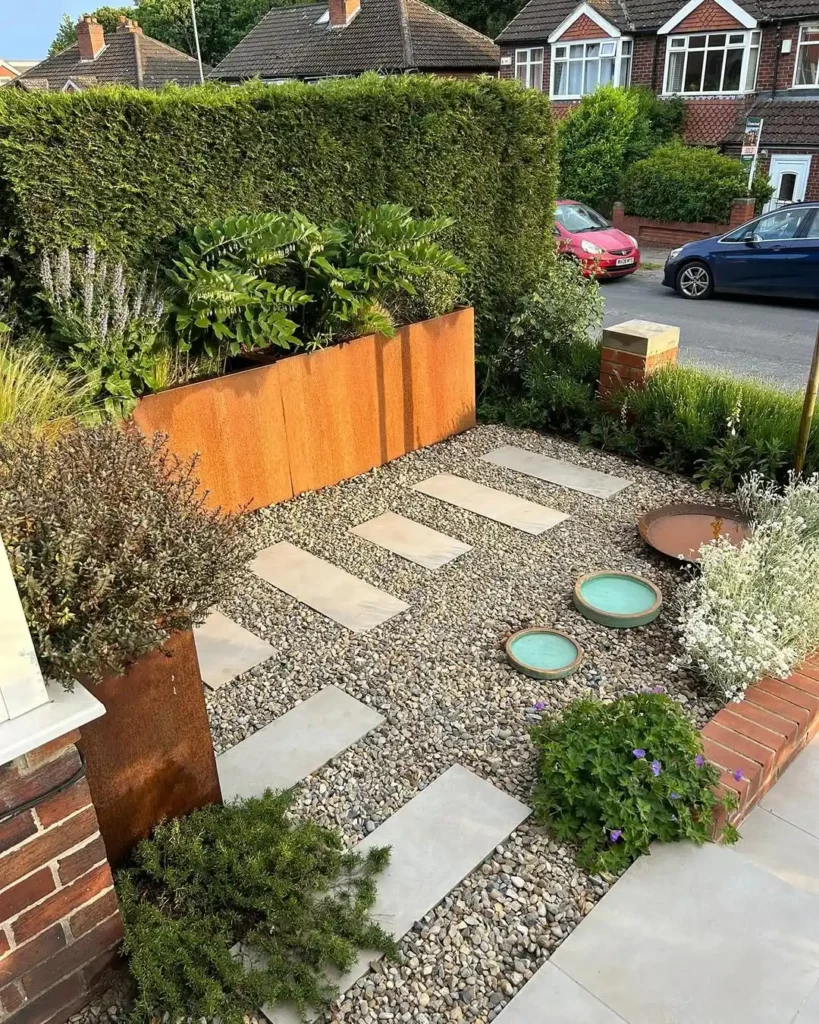
The Inspiration : A stone leaf front garden evokes the ancient traditions of artisans, where sculptors immortalized the transient beauty of nature in a permanent medium. Concrete stepping stones, embossed with the intricate veins of real leaves, form distinctive and resilient pathways that pay tribute to the fleeting seasons. Each custom imprint transforms overlooked foliage into enduring garden art, seamlessly linking hardscapes with living plants in a manner that is both poetic and simple.
Why it Works : A stone leaf front garden is effective because it harmonizes practicality with organic artistry, resulting in weather-resistant pathways that facilitate foot traffic while safeguarding delicate plantings. Cast leaf stepping stones provide stable walking surfaces that mitigate soil compaction and prevent damage to lawns, which is particularly beneficial in areas with heavy foot traffic. The natural textures contribute visual appeal and disrupt the monotony of hardscaping, enhancing the richness and dimensionality of small front yards. In contrast to standard pavers, leaf-imprinted stones honor local flora and the changing seasons through their permanent impressions. On an emotional level, these personalized features convey a sense of craftsmanship and warmth, reflecting a thoughtful design that encourages visitors to appreciate the natural details embedded beneath their feet.
Pro Tip : Choose large, structurally captivating leaves such as rhubarb, hosta, or gunnera to achieve clear vein impressions in concrete. Position the leaves with the vein side facing up prior to pouring, and arrange the stepping stones at a comfortable stride length—approximately fourteen to eighteen inches apart—ensuring that the pathways feel natural and safe rather than awkward to traverse.
Lavandula front wall garden
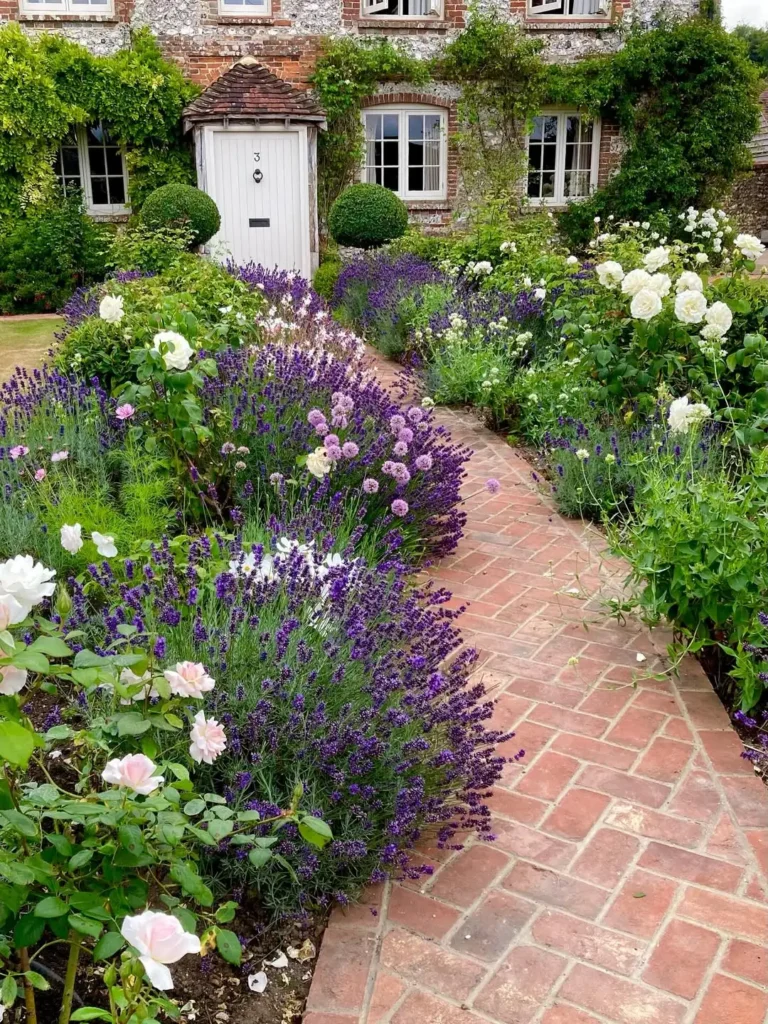
The Inspiration : A Lavandula front wall garden is a bit of Provençal countryside welcoming you at the gate, all silver foliage and humming bees. Lavender along a wall softens the hard edges of masonry, and their smell slides into the street, converting routine entrances and exists into tiny rituals of peace, memory and light.
Why it Works : A Lavandula front wall garden thrives in sunny, well-drained strips that many plants can’t make sense of; the next thing you know, those difficult narrow bases of walls will be busy with growth. Its drought resistance means it won’t require much water, perfect for low-maintenance doorways in hot areas. The repetition of lavender mounds forms a powerful visual rhythm that outlines paths and accentuates architecture without becoming overly fussy. Year-round, the evergreen foliage provides structure and summer bloom spikes are a high-protein source of food for bees and butterflies right at eye level. The scent lightly obscures street odors and immediately imparts a welcoming feeling. Psychologically, lavender’s connection to relaxation and cleanliness creates a sense of calm in the home before anyone has even entered.
Pro Tip : Plant one type of lavender in a row across the front wall, staggering plants so only mature mounds touch (usually 30-45cm/1—11/2ft apart). Lightly trim after blooming in spring, maintaining a domed shape and never cutting into the old wood, to keep dense cushions that won’t go woody or split open.
boxwood shrub garden

The Inspiration : Gardens of boxwood shrubs date back to ancient Rome, when the homes of the very rich put in order their terraces and parterres with carefully trimmed evergreens. The art enjoyed a European renaissance in the 16th century, Elizabethan knot gardens and Versailles’ geometric precision establishing boxwood as the enduring backbone of sophisticated, structured landscapes.
Why it Works : Unsurpassed in value Boxwood gardens are one of the most versatile garden plants from formal to cottage and contemporary. Their evergreen leaves maintain color and form all year long – an added bonus when plantings around them die back in the cold winter months. Tolerant of most soils, part shade and little water once established. Boxwoods are naturally resistant to deer, and a great solution for problem areas. Their bushy, compact growth habit is perfect for anyone with limited space. Impressive planted on mass or as a hedge. Boxwoods make a rank of substantial visual lines; living walls that can define garden rooms, offer privacy and frame paths with good looks that never grow old.
Pro Tip : For a soft and more natural look in casual gardens, clip boxwoods by thinning out branches rather than shearing. This method ensures light and air flow to inner branches while retaining size; a looser habit looks lovely in cottage gardens or among perennials.
coral bells front garden
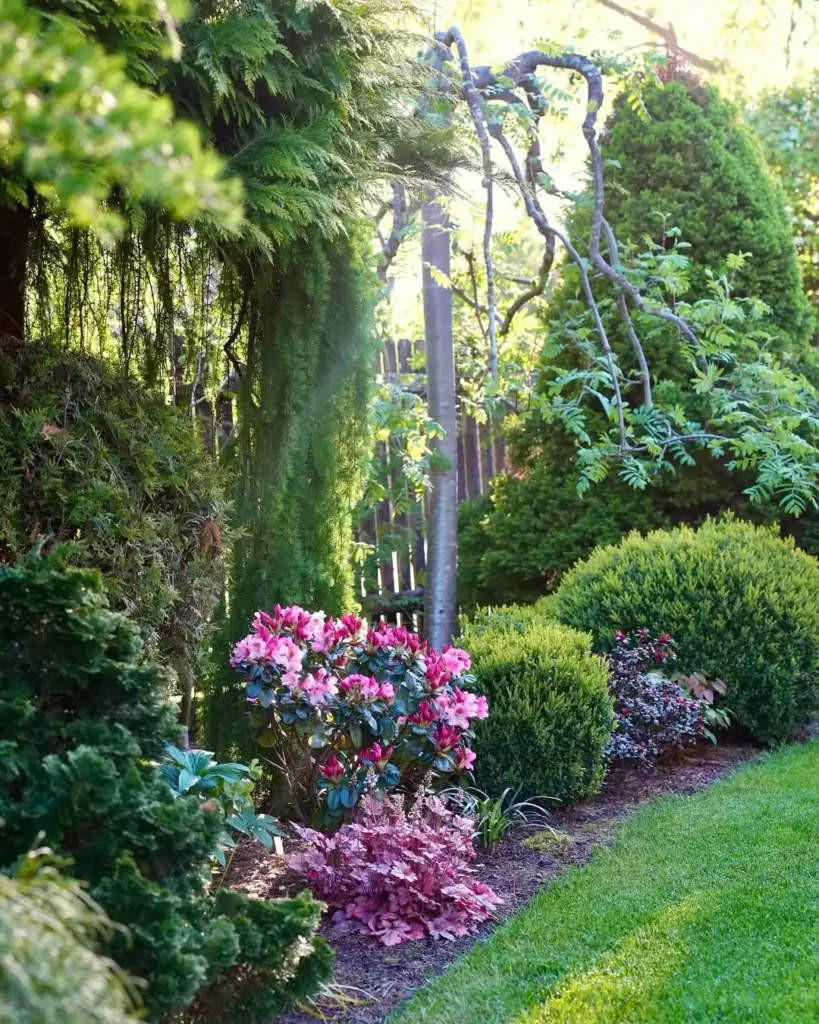
The Inspiration : Coral bells have their origins as native plants in the woodlands of North America, flourishing under the lofty canopies where dappled sunlight plays upon their jewel-like leaves. Contemporary breeders have elevated these modest wildflowers into vibrant stars of the palette, presenting shades of burgundy, caramel, silver, and chartreuse that would inspire any painter. Their development is a testament to the fusion of nature’s artistry and human creativity.
Why it Works : Coral bells provide year-round visual appeal with their semi-evergreen to evergreen foliage, showcasing a remarkable spectrum of colors—from deep purple-red to lime green and silver patterns. These low-maintenance perennials flourish in hardiness zones 4-9, thriving in shaded areas where many colorful plants struggle, while also adapting well to partial sunlight. Their compact, mounding growth habit softens the harsh lines of pathways and borders without overwhelming smaller front gardens. Once established, they are drought-resistant, requiring only weekly watering and minimal upkeep. The bell-shaped flowers that bloom in spring attract hummingbirds and other pollinators, contributing to their ecological significance. When planted in mass, they create an effective ground cover that suppresses weeds while displaying dramatic foliage.
Pro Tip : Arrange coral bells in groups of three or five at the front edge of your border, choosing varieties that harmonize with the exterior colors of your home to enhance curb appeal. Space the plants two feet apart to accommodate their mature spread, and pair lighter chartreuse varieties in sunnier locations with darker burgundies designated for shadier spots.
modern privacy garden
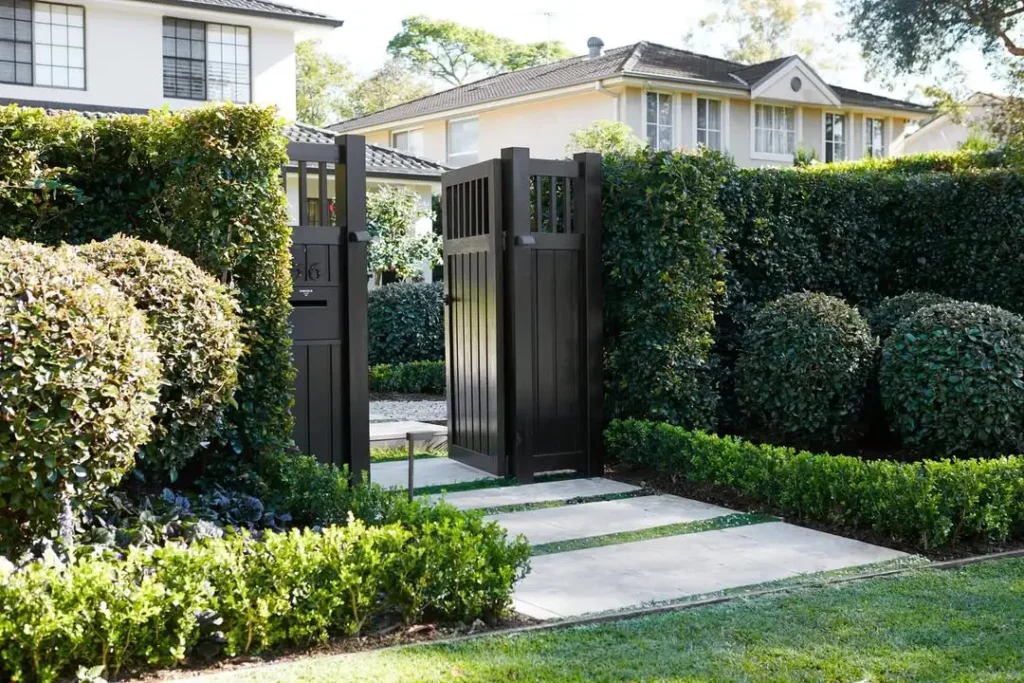
The Inspiration : A contemporary privacy garden reinterprets ancient walled courtyards as living structures, replacing stone barriers with layers of greenery and sleek screens. It converts overlooking windows into framed views of swaying grasses, shaped shrubs, and filtered light, providing urban residents with a tranquil, private sanctuary that appears curated yet subtly untamed.
Why it Works : A contemporary privacy garden obstructs sightlines through layered plantings, screens, and pergolas, fostering seclusion without creating a confined atmosphere. Vertical features and narrow planting beds optimize small urban or suburban spaces, transforming neglected side yards and overlooked patios into functional outdoor areas. An evergreen framework guarantees year-round privacy, while seasonal grasses, perennials, and containers maintain a dynamic and visually appealing environment. Sound-absorbing foliage and water elements assist in muffling street noise, alleviating stress and promoting relaxation or focused outdoor work. At night, gentle lighting on plants and textures enhances usability, creating an intimate yet elegant atmosphere.
Pro Tip : Prior to planting, position yourself in your primary seating areas and outline precise sightlines from adjacent windows or streets, then design tall features only where necessary, leaving other views unobstructed. Pair one evergreen foundation with two contrasting textures—such as light grasses and striking foliage—for privacy that feels deliberate, rather than oppressive or confining
Townhouse Garden Walls

The Inspiration : Townhouse garden walls reflect the walled compartments of Tudor England, where aristocrats segmented their estates into cozy “garden rooms” designed for reflection and enjoyment. This tradition was further refined in Victorian London, which utilized brick walls to establish microclimates suitable for exotic plant collections while delineating boundaries in densely populated neighborhoods. These vertical structures transformed limited urban spaces into private retreats.
Why it Works : Townhouse garden walls are crucial for ensuring privacy and reducing noise in compact urban environments where residences are situated just feet apart. These walls create microclimates that help regulate temperature fluctuations, shield against wind, and retain warmth, thereby prolonging the growing seasons for delicate plants and fostering inviting outdoor living areas. Vertical surfaces enhance the usable garden space through the use of wall-mounted planters, espaliered fruit trees, and climbing vines, all without occupying valuable ground space. The use of brick or stone construction imparts architectural durability and charm that harmonizes with period townhomes while boosting property values. Additionally, walls offer structural support for built-in seating, water features, and lighting installations, effectively transforming small yards into functional outdoor rooms.
Pro Tip : To enhance reflected light in shaded townhouse gardens and create a sense of spaciousness, paint walls in light, neutral shades—such as soft grays, warm whites, or pale terracottas. Install trellis panels eighteen inches away from wall surfaces to facilitate air circulation behind climbing plants, thus preventing moisture damage while allowing for depth and layered planting possibilities for clematis, roses, or jasmine.